
What 1,500 Dying Patients Taught Dr. Christopher Kerr About Love, Fear, and Life’s Final Days


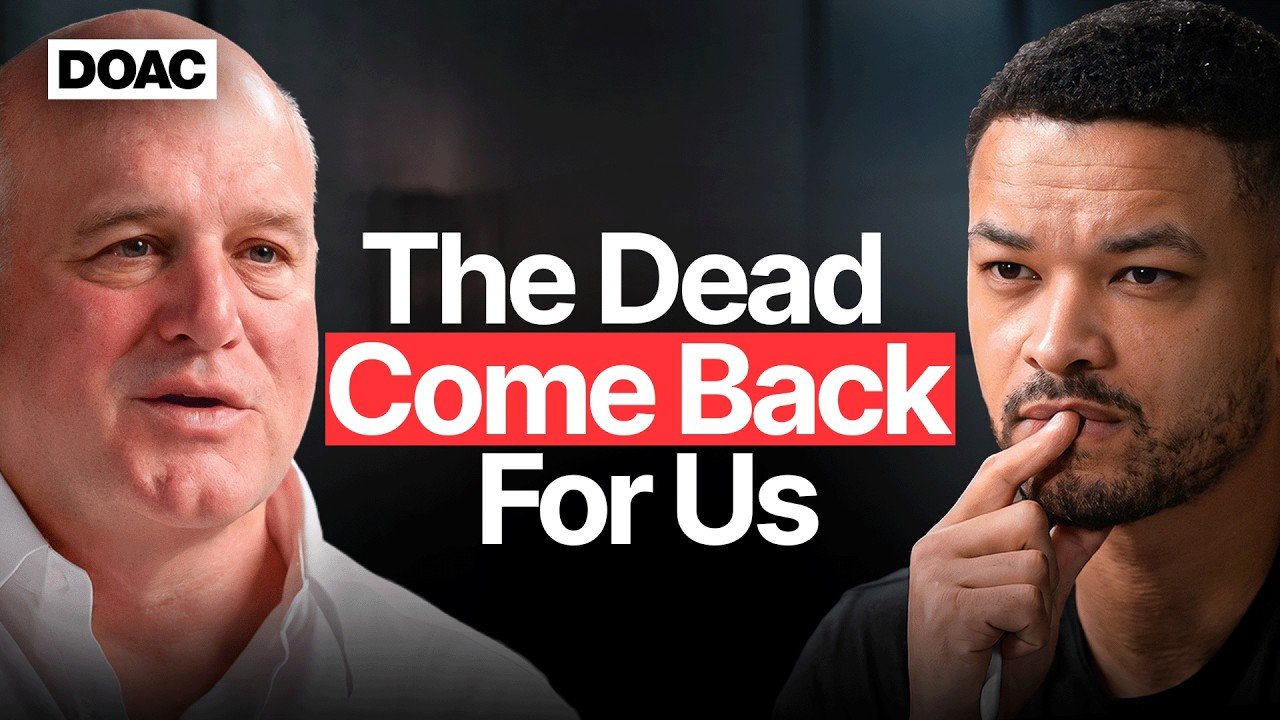
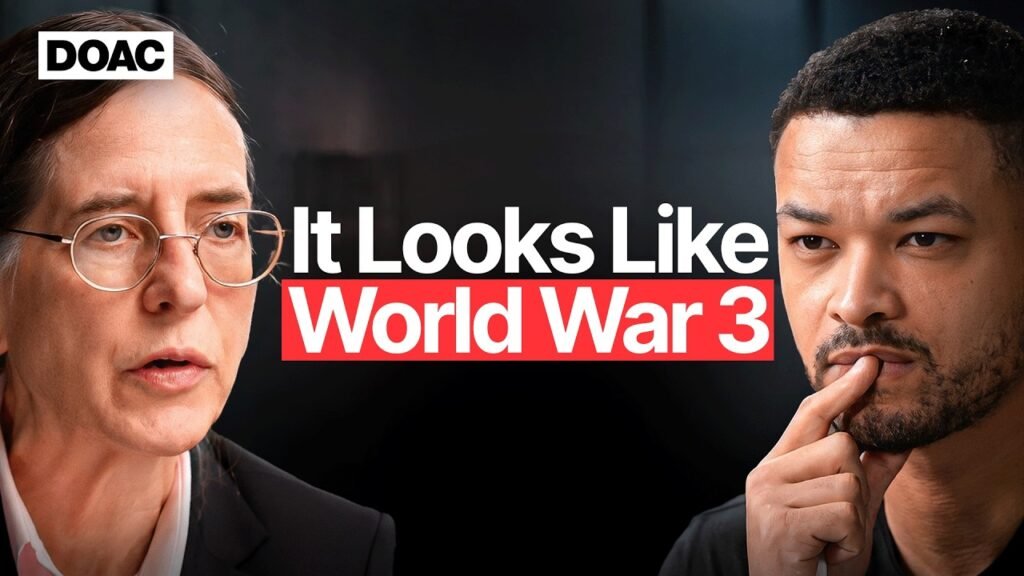
Dr. Christopher Kerr has spent nearly three decades caring for people approaching death. What he describes is not simply a story of physical decline. It is also one of vivid dreams, enduring relationships, and people finding comfort—even as their bodies become weaker.
On The Diary of a CEO, the hospice physician and researcher discusses interviews with approximately 1,500 dying patients, challenging familiar assumptions about regret, suffering, and what matters most at the end of life.
His central message is not that death is always peaceful or that deathbed visions prove an afterlife. It is that focusing exclusively on what the body loses can obscure what a person is still experiencing.
People don’t stop living because they’re dying.
— Dr. Christopher Kerr
Across the conversation, one theme keeps returning: connection. Patients want the people they love nearby. They worry about becoming a burden. And many describe encounters with deceased loved ones that feel profoundly real to them.
The Deathbed Dreams Patients Describe as More Than Dreams
Kerr says nearly 90% of patients in his research experience intense dreams or visions as death approaches. These experiences often involve people they have loved and lost, particularly those associated with unconditional love.
Some occur during sleep. Others, he says, happen while patients are awake. They tend to become more frequent and immersive closer to death.
What distinguishes these accounts, in Kerr’s telling, is their clarity and emotional impact. Patients do not generally ask him to interpret strange symbols or unravel fantastical scenarios. Instead, they describe what feels like an actual encounter.
When we ask them to scale it 0 to 10 on the degree of realism, it’s always a 10.
— Dr. Christopher Kerr
One patient, Paul, describes repeatedly seeing his deceased wife dressed in light blue. She rarely speaks, but her smile leaves him feeling reassured that she is fine.
Another patient, Florence, recounts sitting around a kitchen table with her late husband and daughter, laughing, talking, and eating. For a moment, the years of separation seem to disappear. Asked how she feels about dying, she answers: “I’m not afraid.”
For Kerr, these ordinary scenes are part of what makes the accounts meaningful. Their power comes not from grand revelations, but from the return of familiar relationships.
Why Kerr Distinguishes These Experiences From Delirium
The interviewer raises an obvious question: Could these visions simply be delirium associated with serious illness?
Kerr says his research team screened patients for delirium before administering their questionnaires. He describes the experiences studied as coherent, clearly remembered, and often comforting, rather than disorganized and distressing.
That distinction matters to his broader argument: patients’ accounts deserve attention rather than automatic dismissal.
But the interview also contains an important boundary. The vividness of an experience does not establish its cause, and Kerr does not present his research as proof of life after death.
I wouldn’t be so bold as to say this speaks to an afterlife.
— Dr. Christopher Kerr
Later, he shares his personal belief in a soul and speculates about consciousness continuing beyond the body. Those are his spiritual interpretations, distinct from his observations of what patients report.
The finding he emphasizes most consistently is more immediate: whatever their ultimate explanation, these experiences can leave patients feeling loved, connected, and less afraid.
What Dying Patients Actually Prioritize
A substantial part of the conversation compares what medical students expect dying patients to value with what patients themselves identify as important.
Among the priorities discussed are:
- Not being a burden.
- Spending time with friends and family.
- Managing pain and other symptoms.
- Finding spiritual or existential peace.
- Remaining mentally aware.
- Dying at home.
- Having care wishes respected.
Kerr is especially struck by patients’ concern for other people. Rather than becoming entirely self-focused, many worry about how their illness affects their families.
He also distinguishes wanting more time from wanting life prolonged regardless of its quality.
What they want to do is live as well as they can as long as they can.
— Dr. Christopher Kerr
In his account, the question is not simply how long treatment can keep someone alive. It is what that remaining time allows them to experience—and whether care reflects their wishes.
Why He Pushes Back Against the “Deathbed Regrets” Narrative
Kerr challenges the popular idea that dying people spend their final days cataloguing mistakes, missed opportunities, and unfinished ambitions.
He does not say regret never occurs. Rather, he argues that it is not usually what patients spontaneously bring to the surface.
I can honestly say I’ve done this for nearly 30 years, and that’s not what I hear.
— Dr. Christopher Kerr
There is a difference, he explains, between asking whether someone has regrets and asking what matters most to them now. A person may acknowledge unresolved conflicts without considering them their highest priority.
The interview complicates this point with stories of patients who do experience remorse. One is Dwayne, whose distressing dreams bring past harm into focus. Kerr describes how Dwayne subsequently asks to see his daughter, holds her, tells her he loves her, and apologizes.
The story does not erase the harm. It illustrates Kerr’s observation that emotional change and reconciliation can still happen near death.
His broader point is that a dying person is not simply a list of problems waiting to be resolved.
The Fear of Suffering—and the Conversations Medicine Avoids
Kerr also challenges the assumption that dying necessarily involves severe, uncontrollable pain. In his experience, suffering is often more manageable than people anticipate.
That is his clinical perspective, not a promise that every death will be painless. His criticism centers on how little patients are sometimes told about what to expect and what support is available.
These honest conversations actually don’t take away hope. They restore agency.
— Dr. Christopher Kerr
He argues that avoiding the subject can deprive patients of time to make decisions, communicate their wishes, and spend their remaining days as they choose.
His discussion of home and hospital care follows the same principle. Familiar surroundings, loved ones, and freedom from unwanted interruptions can matter deeply to patients. The underlying question is whether care serves the person’s priorities—not merely whether another intervention is possible.
Hope Does Not Have to Mean a Cure
One of Kerr’s most memorable lessons concerns the changing nature of hope.
At diagnosis, a person may hope for recovery. As circumstances change, that hope may become a wish for comfort, another conversation, or time with family. Eventually, it may center on the future of those who will remain.
Hope never fades. It changes.
— Dr. Christopher Kerr
Kerr sees a version of this in patients who agree to participate in research or be filmed. They may never benefit personally from the work, but they still want their experiences to help someone else.
Accepting that a cure is no longer possible, in this account, does not mean having nothing left to hope for.
Grief Is Also About What Remains
The conversation becomes especially personal when Kerr discusses losing his father to cancer at 12.
For years, he says, he struggled even to speak his father’s name. The last time he saw him, his father was having an end-of-life experience—the very subject Kerr would later share publicly.
That history shapes his view of grief. Physical absence is real, but it does not account for everything a relationship leaves behind.
We talk about grief in terms of what we lose but not necessarily what remains.
— Dr. Christopher Kerr
Kerr also describes research involving approximately 750 bereaved families, focused specifically on the effects of witnessing end-of-life dreams and visions. He says seeing a loved one comforted by these experiences can influence how relatives remember the death and experience their bereavement.
One example involves Patrick, who tells his partner Jennifer that he dreamed of making sauce with his deceased grandmother. They then spend hours preparing the recipe together. For Jennifer, the experience becomes part of how she understands his final days: not solely as a period of loss, but as a moment of renewed connection.
Becoming a Patient Changed What Kerr Could See
Kerr’s own stage-four cancer diagnosis brought these questions into his daily life.
Previously restless and constantly active, he found himself forced to slow down. During recovery on his farm, he gradually extended his walks until, one day, he noticed the beauty of willow trees he had planted decades earlier.
The trees hadn’t changed. I changed.
— Dr. Christopher Kerr
It is a small moment, but it captures the interview’s larger shift in perspective: meaning does not always require another achievement. Sometimes it involves becoming able to notice what is already there.
Asked directly about the meaning of life, Kerr avoids offering a definitive explanation. Instead, he returns to the relationship between love, vulnerability, and facing difficulty together.
I don’t know about meaning, but I know the destination is always love.
— Dr. Christopher Kerr
Research figures and clinical observations are attributed to Kerr as stated in the conversation; his spiritual interpretations are presented as personal beliefs. Pull quotes are lightly cleaned of speech disfluencies.
This recap is based on Dr Christopher Kerr’s appearance on the Diary with a CEO podcast. For the full episode, click on the YouTube link at the top or listen wherever you get your podcasts.