
Jennifer Lawrence on Call Her Daddy: Motherhood, Hunger Games Memories and Why She’s Speaking Up


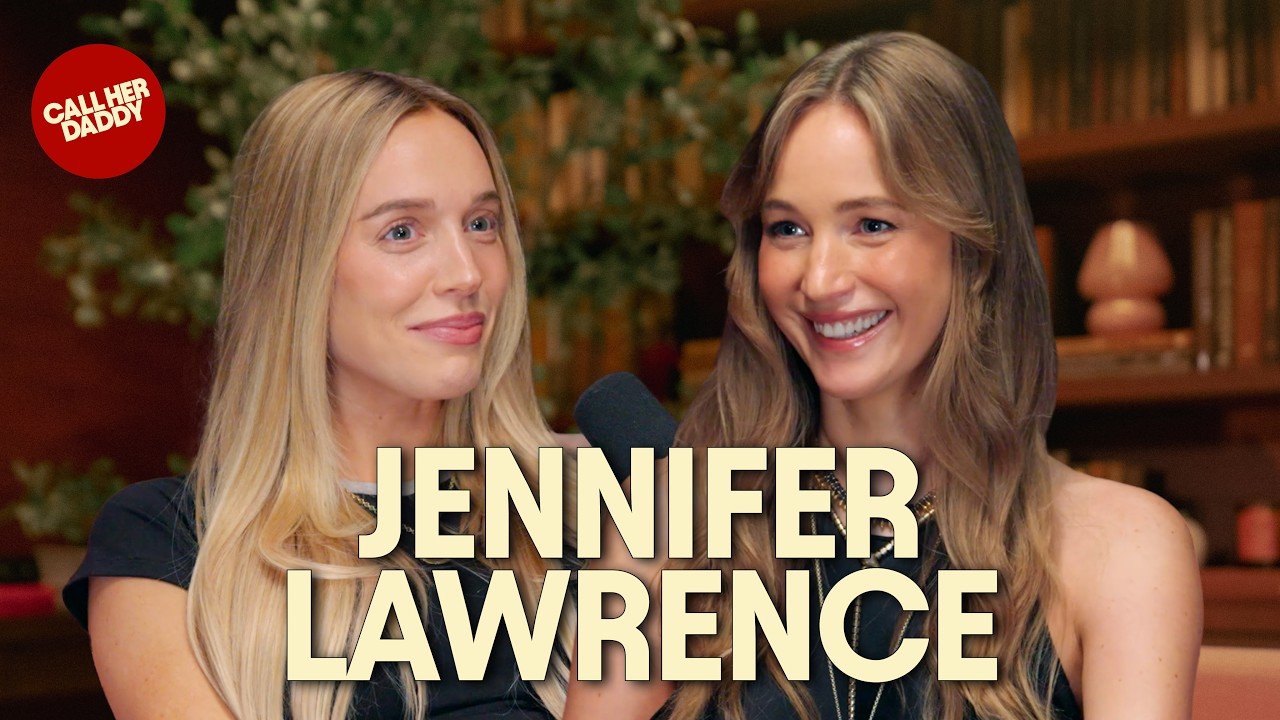
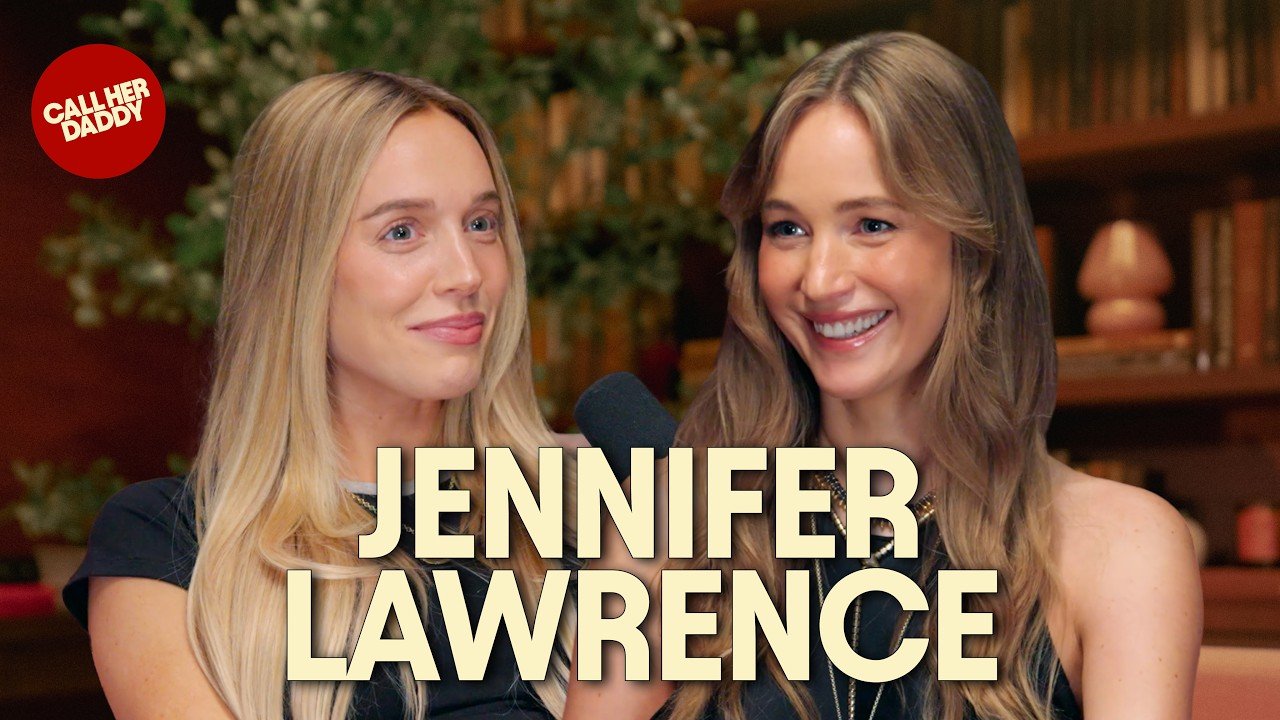
Jennifer Lawrence brings plenty of jokes to her Call Her Daddy conversation with Alex Cooper, but some of the interview’s most revealing moments arrive when she stops trying to land a punchline.
Looking back on The Hunger Games, opening up about anxiety after having her second child, and explaining why she challenges uncomfortable situations on set, Lawrence describes a life shaped by competing pressures: wanting to do her work well, protect her family and stop letting other people’s expectations make every decision.
There are lighter confessions, too. She argues with strangers on a secret TikTok account, considers her music taste deeply private and has a surprisingly straightforward answer about how she spends child-free time with her husband.
Sitting in silence on our phones.
Oversharing Comes Naturally. Canceling Plans Does Not.
Cooper begins by suggesting that Lawrence’s approachable public personality makes strangers feel as though they already know her. Lawrence’s response is immediate:
Nobody ever overshares more than me.
Her example of an awkward fan encounter involves declining a photograph after a skin peel, then remaining trapped beside the person on a slow escalator.
That discomfort with everyday social situations extends to canceling plans. Lawrence says her husband can simply tell someone he cannot make it. She, on the other hand, feels compelled to construct an elaborate emergency.
If a white lie to get out of dinner is wrong, then I don’t want to be right.
She jokes about inventing injuries and freak weather events when the real explanation is that she wants to stay home. The irony, she admits, is that she loves receiving the same cancellation she finds so difficult to deliver.
As for quiet evenings with her husband, she sees nothing inherently alarming about sitting together without much conversation. Sometimes, she jokes, there is no need to ask about each other’s day when both people already know exactly what happened.
Why Becoming Katniss Was a Bigger Decision Than It Looked
Lawrence remembers her Hunger Games audition through oddly specific details: skinny jeans, a stop to buy candy and director Gary Ross crying during her reading in an office above his garage.
She took the tears as a positive sign, though she did not assume the role was hers.
Once the offer arrived, her concerns were less about the expectations of the books’ fans than about what a franchise that large might do to her career and private life. Having seen the attention surrounding Twilight, she understood that accepting Katniss would mean more than taking another acting job.
The one thing that I was always sure of when I was younger was like I want to be a mom.
Lawrence asked for a few days to think before saying yes. By the time filming began, months of physical preparation, archery and stunt training had helped her feel confident about the decision.
Her first-day behavior was less controlled. While filming in an old house in North Carolina, she recalls punching at a fly and shattering a window.
Her explanation: “Something moved me.”
Returning to The Hunger Games Felt Like a Reunion
Asked about returning for a new Hunger Games movie, Lawrence describes the emotional impact of seeing familiar crew members alongside Josh Hutcherson and Woody Harrelson.
The reunion brought back not just the characters, but the relationships built around making the earlier films.
Josh and I like didn’t walk to the bathroom without our arms around each other.
Harrelson, she adds, entered through her hotel-room window uninvited—a detail she presents as entirely in keeping with their friendship.
Lawrence also revisits the story that she deliberately ate tuna and garlic before kissing Liam Hemsworth. She disputes the suggestion that it was a calculated prank, explaining that they filmed together for months and she was simply eating food she enjoyed.
Her willingness to offer an unfiltered opinion has not always stayed lighthearted. After declaring herself “team Gale,” she recalls the unexpectedly hostile response to her support for Jeremiah in The Summer I Turned Pretty. Lawrence says people sent messages telling her she should die over what she considered a relatively innocent television preference.
Her Silver Linings Playbook Confidence Survived the Evidence
Lawrence remembers being nervous about meeting Bradley Cooper, whose role in The Hangover had made him an especially intimidating celebrity in her eyes.
But she brought no such hesitation to their dance rehearsals for Silver Linings Playbook.
According to Lawrence, she felt certain she was an excellent dancer. Later, she had to record additional dialogue explaining that her character was not especially good at dancing but enjoyed it anyway.
If you had put a gun to my head while we were shooting, I would have been like, I’m really really good. I’m an amazing dancer.
Even the extra line barely shook her confidence. She jokes that she could explain it away as evidence of her character’s humility rather than a judgment on her performance.
The Pixie Cut Was Her “First Tiny Little Protest”
The conversation about Lawrence’s hair-care brand, Mess, becomes more personal when she explains how little control she once had over her own hair.
During screen testing for her X-Men character, she says her hair was dyed repeatedly in a single day, leaving it damaged. Later, while making The Hunger Games, she wanted to use a wig rather than continue dyeing her hair brown.
When that request was refused, she says she took matters into her own hands.
I had my first tiny little protest of giving myself the worst haircut anyone has ever seen in their life.
The haircut was her much-discussed pixie cut. Looking back, Lawrence jokes that its online afterlife became a source of anxiety when she began dating her now-husband.
I have a crush on you. Please don’t Google me.
Growing her hair back changed her relationship with hair care. She says she became obsessive about its condition, which helps explain why launching a brand feels like a meaningful extension of her experience rather than an unrelated project.
Lawrence acknowledges that entering a new business is intimidating. In acting, she has years of experience to draw on; in hair care, she is learning a different industry.
Still, she does not think the move needs to make sense to everyone.
The transition to me makes sense. It doesn’t have to make sense to anybody else.
Later, asked to choose favorite products, she singles out the root spray, mask and restyling serum. She credits the serum with helping her extend a blowout for several days—her own account of how she uses the line, rather than an independent assessment of its performance.
Speaking Up on Set Is About More Than Her Own Comfort
Remembering Mystique’s makeup process in X-Men: First Class, Lawrence says the body paint and glue took eight hours to apply each time.
She turns the discomfort into a joke, declaring herself an unrecognized hero. But the discussion leads into a more serious distinction between adapting to a role and accepting a situation that crosses professional boundaries.
Lawrence says changing her appearance can be part of the creative work. She cites director Lynne Ramsay’s request that she cut and bleach her hair for Die, My Love—a look she initially questioned but eventually loved.
An incident involving nudity demanded a different response. Lawrence recalls unapproved crew members being present on set and says she addressed the situation firmly.
Her concern was not only for herself. If established actors did not insist on those protections, she asks, what position would that leave an unknown young performer in?
Do I say something and get a reputation for being difficult or do I just let these people that I’m not comfortable seeing me naked see me naked?
For Lawrence, explaining why the situation was unacceptable was part of recognizing the influence she now has.
Motherhood Brought Love—and a Persistent Sense of Guilt
Lawrence says she wanted children long before she felt the practical circumstances were right. Finding the right partner, getting married and deciding when to start a family were separate steps.
Even feeling ready, however, did not prepare her for everything.
She jokes bluntly about postpartum physical changes, then describes the uncertainty of being told maternal instinct will supply answers that do not always arrive. Hearing that mothers could distinguish their babies’ different cries, for example, left her questioning herself when she could not.
The emotional pressure has been harder to dismiss.
I don’t think I’ve ever just like gotten into bed and been like, ‘Wow, God, I’m such a good mom.’
Lawrence immediately makes clear that she does believe she is a good mother. The difficulty is allowing herself to feel satisfied when the responsibility matters so much.
In her description, guilt can attach itself to opposite choices: not being there enough, then worrying that being there too much could make her children overly dependent.
Motherhood has also changed the practical side of her working life. Lawrence carefully distinguishes between its effect on her “career” and its effect on her “work.” Having children, she says, has made her much more deliberate about structuring her time.
Without that structure, she feels she risks not giving either part of her life the attention it needs.
“I Feel Like I’m Being Chased by a Tiger”
One of the interview’s most vulnerable moments comes when Lawrence discusses struggling after the birth of her second child.
She recalls getting into an elevator and being asked by another mother whether she was okay. The question gave her an opening to admit that she was not.
I’m really scared. Every day I have such bad anxiety. I feel like I’m being chased by a tiger.
Another mother heard her, hugged her, offered her phone number and talked with her.
For Lawrence, that encounter illustrates why relationships with other mothers have become so important. Baby classes and school connections have offered more than company; they have created opportunities to be understood without having to explain everything from the beginning.
Cooper connects with that feeling, saying that hearing from women who have already been through similar experiences makes pregnancy feel less isolating.
When invited to give Cooper one piece of parenting advice, Lawrence suggests resisting the urge to fill every quiet moment with something to entertain a child. Her point is to avoid immediately assuming that a child needs a distraction simply because they are sitting still.
A Secret TikTok Account and One Surprisingly Private Subject
Lawrence’s online habits provide a sharp change of pace.
She confirms that she has a secret TikTok account and says she regularly argues with strangers, including over English royal history. Her feed also includes elaborate beauty routines, hair content and recipes.
If I’m breathing, I’m rage baiting.
Yet someone so willing to disclose embarrassing stories draws a firm line at sharing her listening habits.
Asked about Spotify Wrapped, Lawrence says she finds the idea of posting it uncomfortable. She listens to the same three songs, she says, but refuses to identify them.
Of all the things we’ve talked about today, that is so deeply private.
She jokes that music exposes an internal world she would rather keep to herself—including the imagined scenarios playing out in her head while she listens.
Reality TV Is Where She Has Plenty to Say
Asked to name the best reality show of all time, Lawrence chooses the early seasons of Vanderpump Rules. She and Cooper also discuss the influence of Jersey Shore, Laguna Beach and The Hills, with Lawrence acknowledging the distinction between a show’s broader cultural importance and her own personal favorite.
Her hypothetical dating-show choice is Love Island, largely because of the friendships between the women. She is less confident about her ability to flirt and quickly rejects the idea of making an actual guest appearance.
Lawrence also has strong criticism for “DadTok,” describing the version she dislikes as men copying women’s success while simultaneously resenting or belittling it.
On Summer House, she confirms that she helped Andy Cohen investigate a reunion audio leak, but declines to explain the details. She says the information she used was public and the task was relatively easy.
Her explanation doubles as a potential reality-TV tagline:
My name’s Jennifer and I can’t mind my own business.
Why Paparazzi Speculation Bothers Her
Near the end of the conversation, Cooper invites Lawrence to clear up a misconception. Lawrence chooses the assumption that she calls photographers to arrange candid pictures.
She rejects that characterization of her own paparazzi encounters, arguing that photographers already know where she lives and can wait for her to leave.
The idea that she would deliberately summon them while heading out in mismatched socks and a messy bun frustrates her. She also disputes the suggestion that constant visibility necessarily benefits her work.
You know what would help my career? Anonymity. Mystique.
After an interview built around her willingness to share, it is a revealing distinction: being candid in a conversation does not mean wanting every ordinary moment turned into public material.
This recap is based on Jennifer Lawrence’s appearance on the Call Your Daddy podcast. For the full episode, click on the YouTube link at the top or listen wherever you get your podcasts.