Zelenskyy on War, Family and the Day Everything Changed: “My Only Dream Is to End This War”

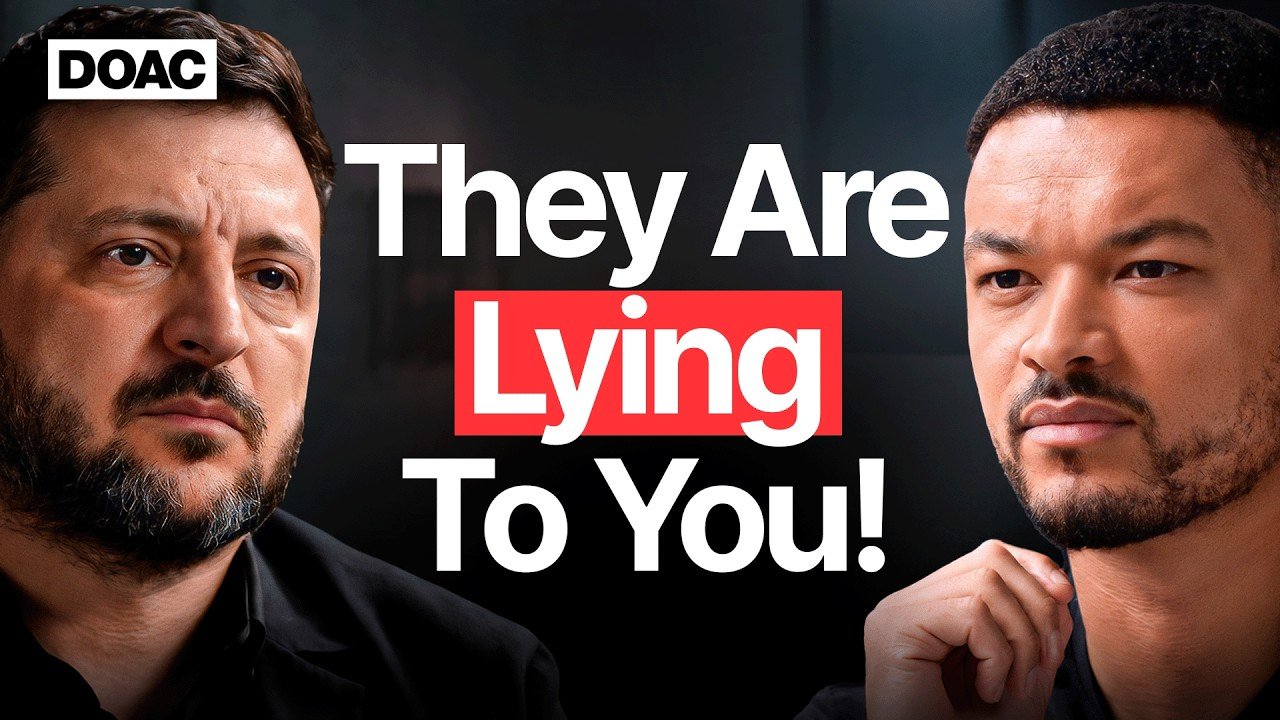
In a wide-ranging interview, Volodymyr Zelensky reflects on the decision to remain in Kyiv, the emotional aftermath of Bucha, his disagreements with Donald Trump, and the family relationships that keep him grounded.
Asked how he is really doing, Volodymyr Zelensky does not reach for a polished answer.
“Well, it’s hard,” he says, describing his own survival as inseparable from that of his country. Yet he insists that hope remains necessary: “I still believe good wins.”
That tension runs through the conversation. Ukraine’s president speaks about sleepless nights coordinating air defenses, the shock of seeing bodies in Bucha, and the difficulty of being emotionally present for his children while leading a country at war.
He also defends his decision to remain in Kyiv during the full-scale invasion and argues that a ceasefire would already represent an enormous compromise for Ukrainians who have lost loved ones.
But some of the interview’s most revealing moments come when the discussion moves away from military strategy. Behind the public role is a father who wants his children to be proud of him, a husband who misses his wife even when they are together, and a son whose mother keeps calling until he picks up.
“I Don’t Sleep”: The Responsibility That Follows Him Into the Night
Zelensky says his nights regularly involve conversations with Ukraine’s air-defense operators, discussing immediate needs and whether resources can be moved between regions.
Eight uninterrupted hours of sleep, he explains, have become unfamiliar during the war.
Still, he repeatedly distinguishes his own burden from the suffering of families who have lost children, partners or parents. Recalling a missile strike on a playground, he describes the horror of children dying before they have experienced a peaceful life.
There are children who never knew what peace was.
— Volodymyr Zelensky
Another responsibility he finds particularly difficult is presenting posthumous honors to the families of fallen soldiers.
He remembers strong fathers who, after receiving an award for their child, quietly ask for a hug. Knowing that a son or daughter could die in military service, he says, does not prepare a parent for the reality.
Knowing and losing are completely different things.
— Volodymyr Zelensky
When the interviewer observes tears in his eyes, Zelensky does not attempt to hide them.
I’m a human being. I’m not ashamed to be who I am.”
— Volodymyr Zelensky
From Entertainment to Politics: Not a Scripted Career Move
The conversation also revisits the life Zelensky had before the presidency: studying law, writing comedy, building a media company and playing a history teacher who unexpectedly becomes president in Servant of the People.
He acknowledges the extraordinary resemblance between the television premise and his eventual political career. But he rejects the idea that the series and his move into politics formed a carefully calculated sequence.
Instead, he describes a convergence between his own changing outlook and the public mood.
Russia’s occupation of Crimea and the conflict in Donbas, he says, altered how he viewed his work and his country’s future. His entertainment business had operated across several countries, including Russia, but the experience left him with a sense of betrayal.
The political turn, in his telling, grew out of that rupture—not simply the popularity of a fictional president.
The Morning the Full-Scale Invasion Began
Zelensky says he did not believe Russia would launch a full-scale invasion, despite discussions with international partners about the danger.
He describes the warnings he received as cautious diplomatic signals rather than a clear account of exactly what would happen. He also criticizes the decision not to impose the preemptive sanctions he had requested, arguing that stronger action should have come before the attack.
His recollection of the morning itself is brief and personal.
He was with his family when calls came and missiles began flying. He woke his wife, told his children that war had started, and left for the office.
Wake up quickly. The war has started. I love you. I’ll call you.
— Zelensky recalling what he told his wife.
At the office, he called in his team and began what he describes as a terrible first working day of the full-scale war.
From that point onward, he says, life became entirely different.
Why He Stayed in Kyiv
Zelensky identifies Joe Biden as the first leader to offer help evacuating him and his family. Asked how he responded, he repeats the line that captures his position:
I need ammunition, not a ride.
— Volodymyr Zelensky
He describes working from a bunker beneath his office, calling foreign leaders and asking European partners to unite behind Ukraine.
Remaining in the capital, he explains, was also a matter of public confidence. As Russia circulated claims that he had fled, he repeatedly appeared outside to show that he was still there.
His presence mattered not only to civilians but, he says, to soldiers who later told him they felt they were defending their capital, their home and a president who had not abandoned them.
Zelensky does not frame staying as an exceptional act of personal bravery. He presents it as an obligation.
“I believe that this was the only way I could act,” he says.
Why Russia Failed to Take the Capital, in His View
Asked about a Trump clip attributing Russia’s failure near Kyiv to a mistaken turn into muddy terrain, Zelensky rejects that as an adequate explanation.
His argument centers on resistance. Russia, he says, underestimated both the willingness of Ukrainians to fight and the forces needed to capture and hold towns along the route to the capital.
The underlying mistake, in his view, was treating Ukraine as if it lacked a separate national identity.
They didn’t even realize there would be resistance.
— Volodymyr Zelensky
He also highlights the fighting at Hostomel airport, describing it as crucial to preventing Russia from establishing an air route for a much larger landing force.
Across these accounts, his emphasis remains consistent: the capital’s defense depended on military action, local resistance, functioning logistics and a chain of command that did not collapse.
Bucha and the Limits of Forgiveness
When asked to name his hardest day, Zelensky returns to his visit to Bucha after Ukrainian forces regained the town.
He describes seeing bodies in the streets and says the experience changed him completely. His recollection is raw: he speaks about anger, an unfamiliar desire for revenge, and the difficulty of returning to the restraint expected of a president.
That experience shapes his response to demands for compromise.
For Zelensky, sitting down to negotiate is not evidence that the suffering has been forgotten. It means asking people to accept a political process while living with losses that cannot be reversed.
You can’t force people to forgive.
— Volodymyr Zelensky
He argues that a lasting peace needs a path toward accountability. Without some prospect of justice, he fears that grief and anger will continue to fuel further violence.
My only dream is to end this war.
— Volodymyr Zelensky
Ending the fighting and addressing what happened, he suggests, are connected responsibilities—not interchangeable ones.
Family Keeps Him Grounded, but the Distance Remains
Asked what keeps him strong, Zelensky answers immediately: his children.
He wants to set an example of courage without teaching them to suppress pain. Being strong, he argues, does not require pretending to feel nothing.
Later, he describes a more complicated form of separation: missing his family even when they are physically nearby because his attention remains absorbed by work.
Even when they’re near, I miss them sometimes.
— Volodymyr Zelensky
The war has also reordered his priorities. Speaking to the interviewer about the demands of business, Zelensky says professional ambitions now feel secondary to the people whose time and presence cannot be recovered.
His relationship with his wife, he says, rests on love, respect and continuing to find each other interesting.
His mother provides a lighter moment. She calls every day—and, if necessary, repeatedly until he answers. Among her questions is the one that hangs over the entire interview: when will the war end?
His Message to Trump—and to Americans
In the interview’s closing stretch, Zelensky disputes Trump’s criticism of Ukrainian strikes on Russian refineries and rejects the claim that Ukraine is responsible for rising American diesel prices.
He frames the strikes as retaliation for attacks on Ukraine’s electricity infrastructure and says he has proposed an energy ceasefire. Alternatively, he asks for more air-defense missiles to protect Ukrainian facilities.
These are Zelensky’s arguments in the interview, rather than an independently established account of energy-market effects.
On the broader question of ending the war, he argues that Trump should apply stronger pressure to Putin through rhetoric and sanctions. He also questions what security guarantees Ukraine would receive if it withdrew from additional defended territory.
Yet his final message to American listeners is one of gratitude rather than confrontation.
He wishes them strength, peace and the ordinary freedoms that war interrupts: working, praying, spending time with children and sitting down for a family dinner.
We’re grateful for everything America has done for Ukraine. We won’t forget.
This recap is based on Ukrainian President Volodymyr Zelenskyy appearance on the Diary of a CEO podcast. For the full episode, click on the YouTube link at the top or listen wherever you get your podcasts.