
Tory Burch on building a billion‑dollar brand, stepping down as CEO, and why “ambition” shouldn’t be a dirty word


In this episode, Tory Burch walks through the unlikely origins of her label, the personal and legal crises that tested it, and the strategic pivot that let her return to what she loves most: the creative work.
The accidental brand: from “Jax” to Tory Burch
Burch didn’t set out to launch a namesake label. She spent months trying to revive Jax, a 1960s–70s brand her mother wore—only to be told no by entrepreneur Sally Hansen. That rejection forced a pivot: a new name, a new logo, and a direct‑to‑consumer bet in 2004 when “no one was selling online.”
I launched with a terrible name and also a logo… It was because I couldn’t get Jax. And that was why that was the start of me doing my own thing.
The opening day of her Elizabeth Street store plus e‑commerce site turned into an all‑day rush during Fashion Week; inventory sold through faster than expected.
We basically sold through our inventory… It just was one of these things that just sort of started to take shape.
Friends, family, and the fear of taking people’s money
Early funding came from a friends‑and‑family round after approaching ~120 people. Burch was acutely aware of the risk—and told investors plainly: only put in what you can afford to lose.
I was terrified about taking people’s money… I said, ‘Invest what you can lose.’
She also pushed back on advice to strip “purpose” from her pitch. Her conviction that doing good is good for business became a north star—and later, the basis for the Tory Burch Foundation.
Everyone told me not to say [purpose]… I knew that I had this feeling that purpose and business went hand in hand.
The Oprah moment—and the shoe that wouldn’t quit
Two accelerants defined the early scale: an Oprah appearance in year one that drove massive traffic (and didn’t crash the site), and the viral spread of the Reva ballet flat, which became ubiquitous.
Oprah… said, ‘Don’t worry, it’s only… 30 million viewers.’… We had 8 million hits the next day.
Divorce, a public lawsuit, and leading through crisis
Burch’s personal life collided with business when her ex‑husband launched a competing brand during their very public divorce—a situation she describes as “horrible,” compounded by boardroom disrespect. Work became refuge; she leaned into a relentless drive and a culture built as a safe environment for women.
A very public divorce, but then also a very public lawsuit where he decided to build a brand that looked like a cheap version of our brand.
“Don’t call her a socialite”: reclaiming ambition
An early New York Times profile framed “ambitious” as a derogatory label for women. After Jane Rosenthal urged her not to shy away from the word, Burch reframed ambition as personal, gender‑neutral, and something to be celebrated.
Don’t you ever shy away from your ambition… I prided myself on thinking I could do anything a man could do.
She argues the stigma persists: women are still held to different standards, and the pressure women put on themselves matters as much as external bias.
Whatever ambition means to you, whether it’s being a stay‑at‑home mom or a CEO, it’s really about living on your own terms.
Stepping down as CEO—without losing control
After 14 years as CEO, Burch realized the scale of the business demanded an operator’s skill set she didn’t enjoy. She brought in Pierre‑Yves Roussel (ex‑LVMH) as CEO so she could focus on design and brand direction. For her, it was the easiest decision she’d made—and a model for founders who conflate title with control.
It was the easiest decision I’ve ever made… I was pivoting and changing to match my strengths.
Control, she notes, came from governance and ownership choices. Private equity entered the picture primarily to buy out her ex‑husband’s 50% stake after their divorce—not to fuel growth for growth’s sake.
I needed to get him out of the company… that’s why we ended up bringing private equity in.
Her lesson on PE: they’re great at deals, but not operators—so founders must stay close to the business.
Culture, motherhood, and the myth of “having it all”
Burch built flexibility into the company culture: as long as the work gets done, she’s not clocking how it gets done. She models boundaries (e.g., leaving for family routines), knowing it sets conditions for the team.
On motherhood, she rejects performative perfection and social‑media pressure, and pushes back on the idea that kids need constant orchestration.
I don’t think children need nearly as much as we might think they do.
During COVID, with 375 stores closed overnight and 5,000 employees depending on payroll and healthcare, she leaned into crisis mode—advocating for the retail industry with Washington while managing human loss inside the company.
I get better and more focused in a crisis.
The Foundation: capital, community, education
Launched in 2009, the Tory Burch Foundation focuses on US women entrepreneurs through mentorship, community, and access to capital. Programs include fellowships and small grants; the foundation tracks real outcomes (e.g., businesses crossing $1M in revenue).
A partnership with Bank of America has committed $100M to scale impact, with an audacious goal: $1B in revenue added to the economy by 2030 through foundation entrepreneurs.
We’re just about to reach another phase… they committed $100 million to us… We have committed to reaching a billion dollars by 2030.
Burch insists the foundation was never a marketing play; she avoided talking about it early so the work could speak for itself.
Rapid‑fire takeaways
- Morning/night ritual: Walk the dogs and call her mom—twice a day.
- Advice she ignored: “Don’t think of business and purpose in the same sentence.”
- Packing essentials: Tory Sport sweatpants and a cashmere sweater.
- One thing every female founder needs to hear: “Don’t sell yourself short… you have power within.”
- Book that changed her: One Hundred Years of Solitude—for its meditation on time, chance, and generational patterns.
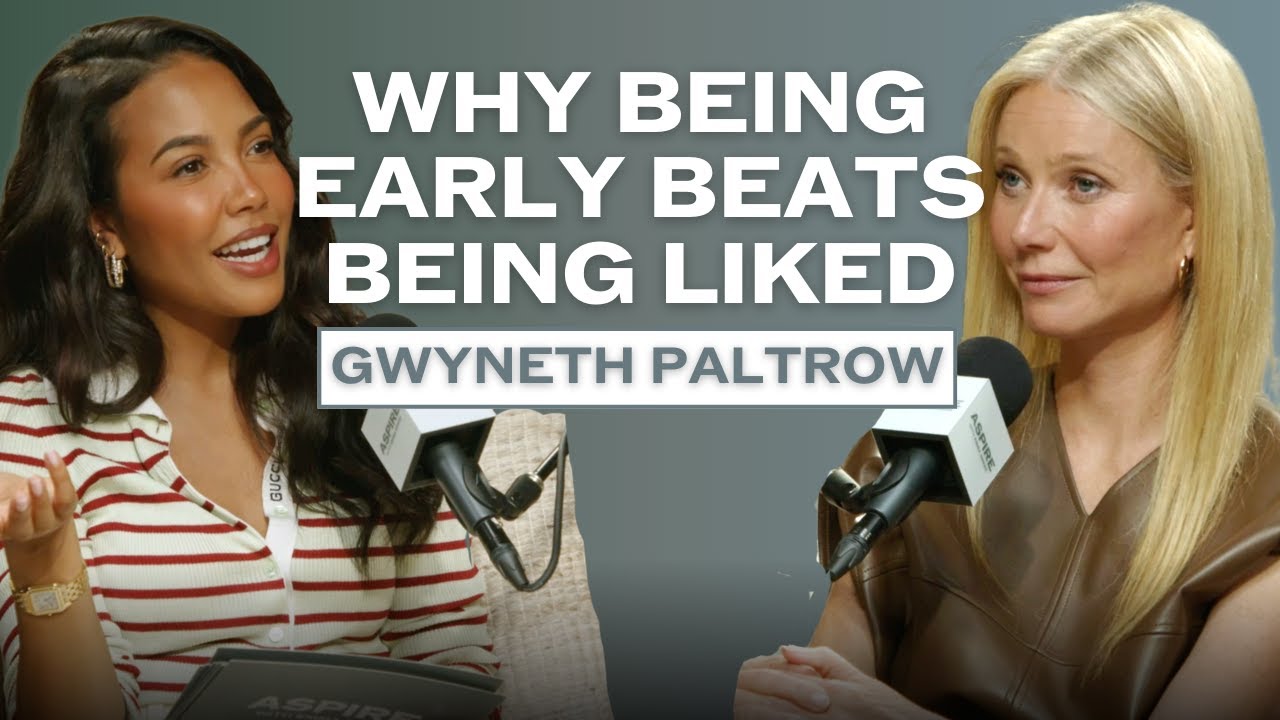
This recap is based on Tory Burch’s appearance on the Aspire with Emma Grede podcast. For the full episode, click on the YouTube link at the top or listen wherever you get your podcasts.