How to Make Yourself Luckier: Dr. Tina Seelig Says Luck Is a Skill, Not Magic

Some people just seem to have all the breaks: right place, right time, right people. Dr. Tina Seelig wants you to stop seeing that as fate—and start seeing it as a skill you can learn.
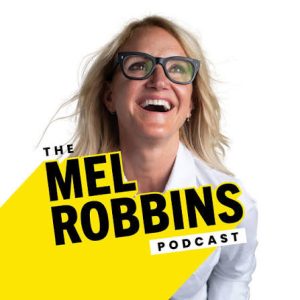
In this conversation with Mel Robbins, the Stanford neuroscientist and entrepreneurship professor breaks down the “science of luck,” why fortune and luck are not the same thing, and the small, everyday risks that quietly turn your life into one of those “how did they get so lucky?” stories.
Most people think luck is random. Dr Tina Seelig argues that while fortune may be outside your control, luck is something you can shape through the decisions you make, the risks you take, and the relationships you build.
Fortune is the things that happen to you. Luck is what you control.
Her core message is simple: opportunities are everywhere, but you have to be ready to notice them and act on them.
Big Idea: Fortune vs. Luck
Most of us use “luck” as a catch‑all for whatever happens to us: good breaks, bad breaks, unfair setbacks, random wins. Seelig argues that’s a category error.
- Fortune is what happens to you: where you’re born, who your parents are, your health, systemic forces like war, racism, pandemics, earthquakes. You don’t control these.music.
- Luck is what you do: how you respond, the risks you take, the conversations you start, the values you hold, and the experiments you run. You control these.
It looks on the surface as though it’s chance, but really underneath there are things that you’ve done to tempt good luck your way.
That one shift—seeing luck as behavior, not destiny—is the foundation of her entire framework. It puts agency back in your hands without denying that life can be brutally unfair.
The Wind Metaphor: How Opportunity Actually Works
Seelig’s favorite metaphor: opportunities are like the wind. They’re always blowing, but most of us don’t have a sail up.
She sketches four archetypes for how people relate to opportunity:
- Shuttered house: You stay inside, shut out the world, don’t look for chances, and assume nothing ever changes.
- Weather vane: You notice opportunities, spin in the wind, maybe endlessly “thinking about” starting, applying, posting—but never act.
- Hot air balloon: You let the winds carry you. You drift based on whatever shows up—useful for exploration seasons, but low on intentionality.
- Windmill and sailboat: You capture and direct the wind. As a windmill, you squeeze value from your current environment (job, city, network). As a sailboat, you actively seek the winds that move you toward a specific destination.
Her core claim: luck is about becoming a sailboat—doing the internal and external work so that when the wind blows, you actually move somewhere you meant to go.
The Sailboat Framework: How to “Build” Luck
To turn that metaphor into something usable, Seelig breaks luck into three jobs: build the sailboat, recruit the crew, hoist the sail. This episode dives deep on the first.music.
1. Build Your Sailboat: Internal Work
This is your “prepared mind”—the part of luck that almost nobody sees. It includes:
- Core values as the keel: If you don’t know what you stand for, you’re easy to manipulate into unethical or illegal situations that feel “unlucky” later. Seelig tells the story of being sent to a competitor’s conference under false pretenses; because she hadn’t thought about her values, she ended up being confronted in an elevator and escorted out as a suspected “spy”.
- The story you tell about yourself: “I’m not good enough,” “nothing ever works out for me,” “people like me don’t get opportunities” is a narrative that blocks luck at the root. Luck starts with rewriting that story so you can see yourself as someone who experiments, asks, and shows up.
- Risk literacy: Instead of asking “Am I a risk-taker?” Seelig maps risk across six dimensions—physical, emotional, social, financial, intellectual, and one more she teaches in class—using a spider chart from 0 to 10 on each axis. The point isn’t to become reckless; it’s to understand where you’re overly cautious and where you can safely stretch.podcasts.
Her advice if your inner story is bleak: don’t try to flip it overnight. Run small experiments—tiny risks—that give you new data about what’s possible for you. Each micro‑win becomes another plank in the boat.
Opportunities are like the wind, but you need a sail to catch it.
2. Recruit Your Crew: External Relationships
The episode hints at, but doesn’t fully unpack, the second pillar: people. Seelig’s own “lucky” breaks—and even her books—trace back to conversations she chose to start and relationships she chose to maintain.
She tells two key stories:
- The United Way bar moment: Mel orders a bourbon “to go,” hears “make it two” behind her, turns around, and meets Christopher Robbins—her future husband of 30 years. The lucky break wasn’t magic; it was a small social risk: responding, talking, staying.
- The publisher on the plane: An early‑morning flight, a choice between sleeping and talking. Seelig starts a conversation, shows her proposal even after a polite rejection, stays in touch, invites him to class for a project on the future of publishing, follows up with student videos, and eventually gets asked by his editor to write a book—off the exact same proposal.
From the outside, it looks like she “met the right person on a plane.” From the inside, it’s a series of deliberate moves: engage, risk, follow up, re‑engage, offer value, persist. That’s crew‑building in action.
3. Hoist the Sail: Daily Actions
The third piece is execution under uncertainty—doing things that could go nowhere, but might change everything.
Seelig gives a classroom example:
- She hands student teams envelopes with $5 and 2 hours to “make as much money as possible.” Most groups default to small, literal uses of the cash: lemonade stands, car washes
- Some teams realize the $5 is a red herring. They use skills instead: pumping bike tires on campus for donations, selling restaurant reservations they’d already booked for high‑demand time slots.
- One team goes further: they realize the real asset is their 3‑minute presentation slot in front of a Stanford design class. They sell that slot to a company who wants to pitch the students—for $650. The “luck” came from reframing the problem and daring to treat an invisible asset as valuable.
Her takeaway: luck loves people who question constraints, see value where others don’t, and act on those insights—even when they might be wrong.
The Six Risk Types: Where Your Luck Gets Stuck
To make this practical, Seelig walks Mel through a “riskometer” with six types of risk mapped 0–10. The nuance matters, because your luck leaks differently depending on where you’re risk‑averse.
- Physical risk: Jumping out of planes, high‑speed cycling, physical danger. Many people over‑index here or confuse adrenaline with good decision‑making.
- Emotional risk: Saying “I love you,” admitting fear, telling someone how you really feel. Seelig scores herself high and sees emotional disclosure as a data‑gathering tool rather than a threat.
- Social risk: Giving a toast, speaking up in meetings, walking red carpets. Mel is a 10 on public speaking but admits she was a “2” on the performative glamour of awards shows until repetition made it less risky.
- Financial risk: Debt, scaling businesses, investing. Mel describes being “stupid” with money early—a string of high‑risk choices that made a later catastrophe almost inevitable—and now is deliberately conservative to avoid being forced into bad decisions.
- Intellectual risk: Tackling hard problems, trying new approaches, assuming “every problem is an opportunity.” This is where Seelig lives—a 10—seeing creativity and problem‑solving as the engine of luck.
Her broader point: preparedness shrinks perceived risk. Venture capitalists and parachute jumpers both look fearless from the outside, but underneath they’re obsessively removing known risks through structure, testing, and safeguards. Luck is not about blind leaps; it’s about calculated experiments.
We are always one decision away from a completely different life.
Why This Conversation Hits Different
Most pop‑culture advice around luck either tells you to “manifest” harder or shrugs that “some people are just lucky.” Seelig threads a third path:
- She fully names unfairness—racism, harassment, poverty, dysfunctional families, prison—and doesn’t pretend mindset erases these realities.
- At the same time, she insists that within those constraints, choices compound: risk profiles can be stretched, stories can be rewritten, skills can be learned, relationships can be nurtured, and tiny experiments can put you in the path of better winds over time.
The most portable idea from the episode might be this:
“You don’t get a job—you get the keys to the building.”
Seen through her lens, luck isn’t about waiting for a miracle; it’s about walking through the doors you already have access to and treating them as laboratories for opportunity.
This recap is based on Dr Tina Seelig’s appearance on the Mel Robbins Podcast. For the full episode, click on the YouTube link at the top or listen wherever you get your podcasts.