


When Food Becomes Medicine: A Psychiatrist’s Journey from Burnout to Breakthrough


What if the key to treating depression, anxiety, and even schizophrenia wasn’t just in a pill bottle—but on your plate?
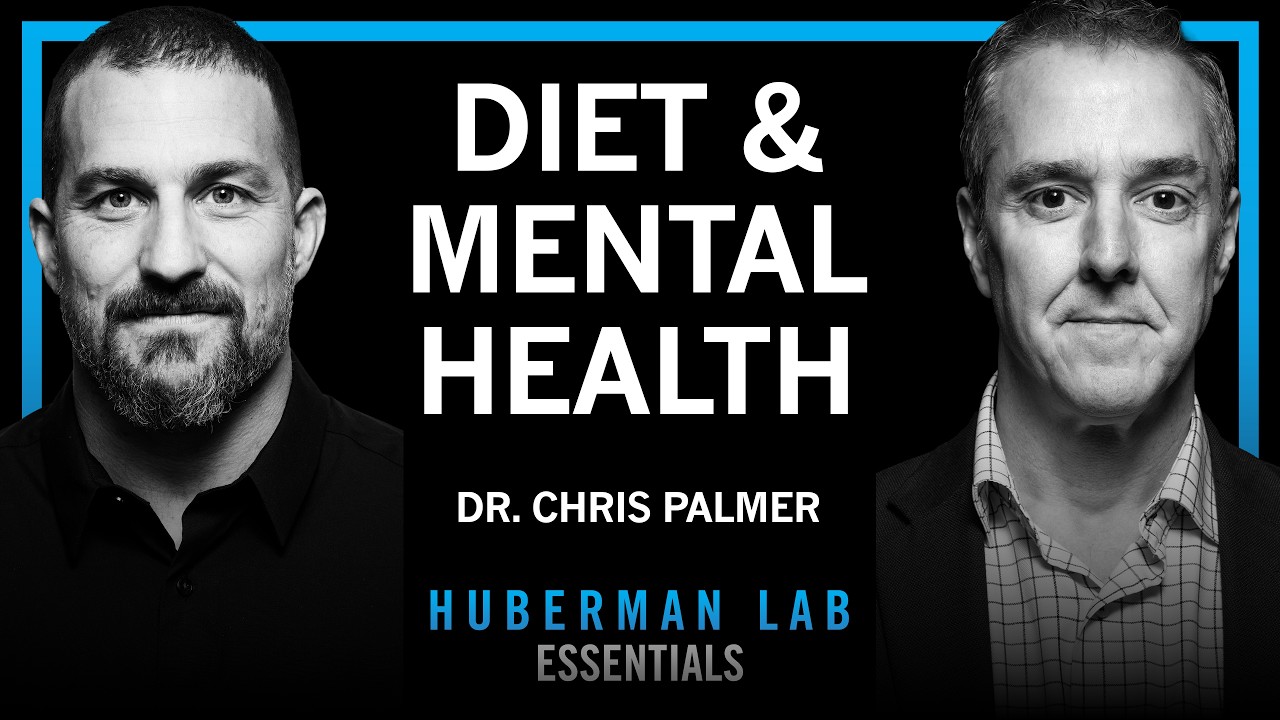
In a revealing conversation on the Huberman Lab Essentials podcast, Dr. Chris Palmer, a Harvard-trained psychiatrist, shares how a personal health crisis led him to rediscover one of medicine’s oldest tools: nutrition. His story—and the science behind it—challenges everything we think we know about mental illness.
The Doctor Who Couldn’t Heal Himself
Dr. Palmer’s journey began not in a lab, but in his own body. Despite following all the medical advice—low-fat diet, regular exercise—he was diagnosed with metabolic syndrome in his 20s: high blood pressure, terrible cholesterol, and pre-diabetes.
My doctor kept telling me diet and exercise. I was doing everything he kept telling me to do. Everything was getting worse.
Facing a future on multiple medications, he decided to try one last thing: the Atkins diet. Within three months, his metabolic markers normalized. But something else happened—something unexpected.
The thing that I noticed was dramatic improvement in my mood, energy, concentration, and sleep. For the first time in my life, I started waking up before my alarm went off and feeling rested.
For the first time, he understood what “work hard, play hard” actually felt like.
From Personal Experiment to Clinical Breakthrough
As an attending physician treating patients with treatment-resistant mental illness, Dr. Palmer began to wonder: if this diet worked for me, could it work for them?
He started offering the ketogenic diet to patients who had failed dozens of medications, years of therapy, and even electroconvulsive therapy. Some saw remarkable results. One woman, chronically depressed and suicidal for over five years, became hypomanic within a month—proof of the diet’s potent antidepressant effect.
But the case that changed everything was a 33-year-old man with schizoaffective disorder. For eight years, he’d heard voices daily, lived in fear, and believed families were controlling his thoughts. He’d tried 17 medications. Nothing worked.
Then he tried keto.
Within two weeks, not only does he start losing weight, but I begin to notice this dramatic anti-depressant effect. He’s making better eye contact. He’s smiling more. He’s talking a lot more.
By week six to eight, the voices began to fade. The delusions dissolved. He lost 60 pounds, completed a certificate program, performed improv in front of a live audience, and eventually moved out of his father’s home to live independently.
Now that I think about it, I don’t think that’s true. And now that I say it, it sounds kind of crazy. It probably never was.
The Science Behind the Shift: Mitochondria, Metabolism, and the Brain
Dr. Palmer didn’t stop at anecdote. He dove into the neuroscience—and found a century of research waiting to be rediscovered.
The ketogenic diet was originally developed in 1921 to treat epilepsy. It mimics the metabolic state of fasting, which had been known since Hippocrates to stop seizures.
Fasting can stop seizures… As soon as people start eating a normal diet again, their seizures usually come right back.
The diet works by shifting the brain’s fuel source from glucose to ketones. This shift triggers profound changes:
- Reduces brain inflammation
- Alters neurotransmitter levels (glutamate, GABA, adenosine)
- Changes gene expression
- Reshapes the gut microbiome
- Improves insulin signaling
But the real magic, Dr. Palmer argues, lies in what it does to mitochondria—the cell’s “motherboard,” not just its “power cord.”
Mitochondria are directing and allocating resources throughout a cell… They happen to be powerhouses as well.
Mitochondria regulate:
- Neurotransmitter production (serotonin, dopamine, acetylcholine)
- Hormone synthesis (cortisol, estrogen, testosterone)
- Inflammatory responses
- Stress signaling
- Gene expression
When mitochondria malfunction, so does the brain. And when they’re repaired? The entire system can reboot.
Mitophagy: The Body’s Self-Cleaning Cycle
One of the most powerful effects of the ketogenic diet is mitophagy—the process by which the body clears out old, defective mitochondria and replaces them with new, healthy ones.
Mitophagy is a subset of autophagy… stimulated by fasting states or fasting mimicking states.
This is why calorie restriction and intermittent fasting are linked to longevity: they force the body to recycle damaged parts and build better ones.
The body doesn’t just destroy the healthiest tissue along with the old dead stuff. It has these processes that identify the old and defective parts first and they go first.
For Dr. Palmer, this is the missing link in mental health:
I believe once you understand the science of mitochondria, you can actually connect all of the dots of the mental illness puzzle.
Not Just for the Severely Ill: What About Burnout?
You don’t need a diagnosis to benefit. Dr. Palmer sees a spectrum:
- For subclinical burnout: Simply cutting out high-carb, highly processed foods can make a huge difference. One vegetarian reader of his book restricted carbs (without going keto) and within three weeks said, “I don’t need prescription medicine. I can’t believe how much better I feel.”
- For serious mental illness: Ketogenic diets with blood ketone levels above 0.8 mmol/L (for depression) or 1.5 mmol/L (for psychosis or bipolar) may be necessary—and should be done under medical supervision, especially if medications are involved.
For some patients, simply getting rid of junk food can make a huge difference… For other patients… I do want a ketogenic diet.”
A New Paradigm for Mental Health
Dr. Palmer isn’t telling people to stop their medications. He’s asking the medical community to expand its toolkit.
Nutrition needs to be considered one of the major tools in the landscape of effective tools.
His work is a reminder that sometimes the most radical treatments are the oldest ones—and that the brain, like the body, runs on fuel. Change the fuel, and you can change the mind.
Key Takeaways
- Nutrition is medicine: What you eat affects your brain’s metabolism, inflammation, and neurotransmitter function.
- Ketosis isn’t just for weight loss: It can treat epilepsy, depression, bipolar disorder, and even schizophrenia.
- Mitochondria matter: They’re not just energy producers—they’re regulators of mood, stress, hormones, and immunity.
- Start simple: For burnout, try cutting out processed carbs and sugar. For serious conditions, work with a professional.
- Don’t go it alone: If you’re on medication, do not attempt dietary changes without medical supervision.
This recap is based on Dr. Chris Palmer’s appearance on the Huberman Lab Essentials podcast. For full episodes and transcripts, visit hubermanlab.com or wherever you get your podcasts.