

Charlotte Tilbury on building a beauty empire by obsessing over the consumer


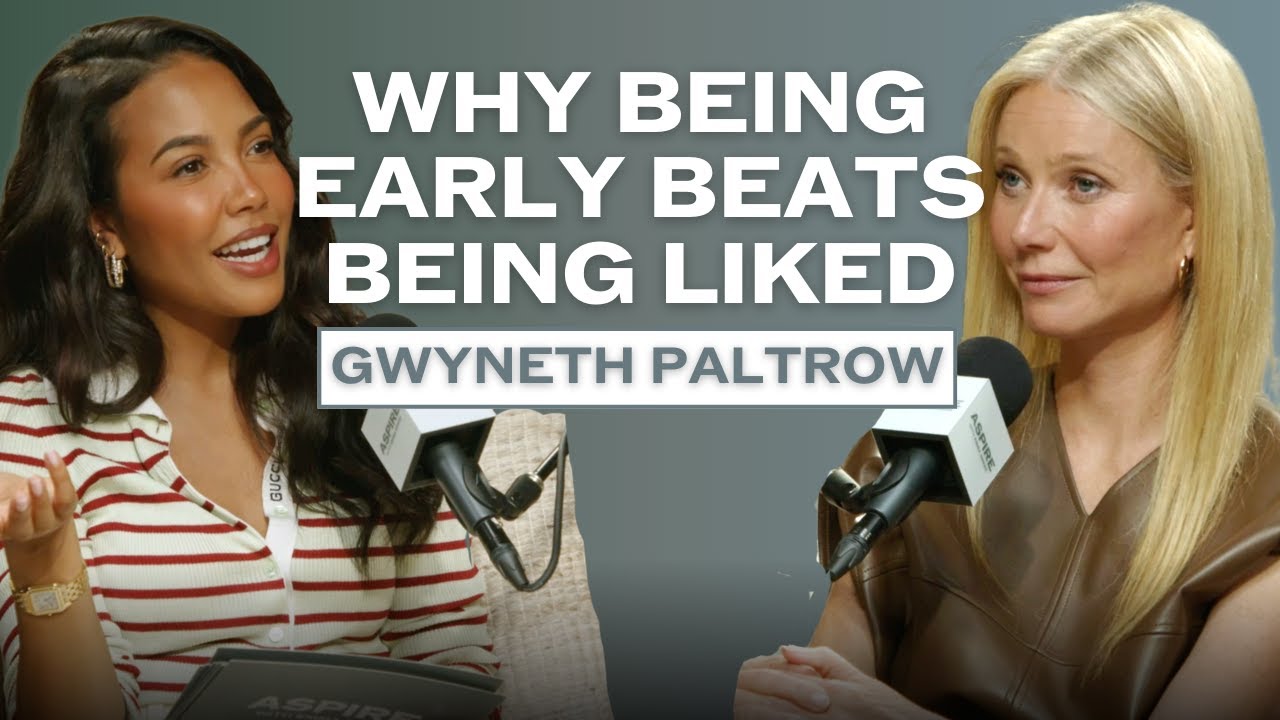
Charlotte Tilbury’s conversation with Emma Grede on Aspire is nominally about beauty, but it is really about founder conviction: how deep product intuition, relentless standards, and a near-theatrical belief in possibility can compound into a global brand. Tilbury explains that what looked from the outside like glamour was, underneath, years of backstage craft, product development, market observation, and an unusually disciplined understanding of what consumers wanted before they could fully articulate it themselves.
Before launching Charlotte Tilbury Beauty, she spent 34 years building a rare career across runway, couture, editorial, and celebrity makeup, then moved into consulting for houses including Tom Ford, Helena Rubinstein, Armani, MAC, and Alexander McQueen. She says that work left her with bestselling products on the market but no equity in the brands, sharpening her resolve to eventually build something she could own outright.
The brand before the brand
One of the clearest insights in the interview is that Charlotte Tilbury existed as a system before it existed as a company. In what she describes as the “Athera” or “Aethera” project, kept in a tin shed, Tilbury documented the market gaps she saw, the consumer journey she wanted to redesign, the 10-look concept, and even early beauty-tech ideas that were ahead of what augmented reality could then support.
That level of specificity matters because it shows she was not simply chasing a founder fantasy. She had spent years watching customers ask how to achieve celebrity looks while retail remained confusing, homogenized, and intimidating, so her pitch was to make beauty easier to choose, easier to use, and easier to believe in. In her framing, the category was ripe for disruption because too few brands were combining aspiration with accessibility.
It’s an overcrowded space. It’s ripe for disruption. Five people own the world.
Why she kept control as Chairman and Chief Creative Officer
Tilbury makes clear that she never wanted to become a ceremonial figurehead; she sees herself as someone who should remain deeply embedded in product, packaging, merchandising, brand world, leadership, and financial detail because that is how a founder protects the original vision while the company scales.
She openly describes herself as “a bit of a control freak,” but the more useful point is how she defines that control: not ego for its own sake, but forensic involvement. Even in a business she says has around 3,000 people and 4,500 points of distribution globally, she frames leadership as knowing enough about every function to ask sharp questions and spot what others might miss.
My CFO says, ‘You always ask the most difficult question… your gut is always right.’
That quote captures something central to her operating style. Tilbury presents instinct not as mysticism, but as pattern recognition built over decades — the result of seeing products, faces, retail environments, and customer reactions at a level of repetition most executives never get.
Dream team, art, commerce
Tilbury sees brand-building as collaborative rather than solitary, and she repeatedly credits the people around her even while insisting on extremely high standards. Her ideal team appears to be one that can execute at an elite level while still operating inside a founder-led culture of urgency, curiosity, and ambition.
That connects directly to the chapter on the formula of art and commerce. Tilbury’s argument, in effect, is that beauty brands fail when they separate creative magic from operational rigor: the art draws people in, but commerce is what makes the brand durable, scalable, and globally consistent. She had to learn P&Ls, legal review, and cost structures not because she wanted to become less creative, but because protecting the creative vision required commercial fluency.
The result is a company positioned as both founder-led and systems-led. She talks about inspiration from Apple’s ease of use and McDonald’s speed, which suggests that her idea of luxury was never only aesthetic. It was also functional, legible, and frictionless for the consumer. She also looked outside beauty for inspiration.
Why the brand resonated
The strongest through-line in the episode is that Tilbury thinks like a consumer before she thinks like a marketer. She talks repeatedly about “need states,” white space, and the emotional side of product design. Not just what performs technically, but what people long for, what confuses them and what would make them feel more beautiful and confident.
That philosophy shaped some of the brand’s biggest hits. Tilbury points to Pillow Talk — which she describes as the world’s number one lipstick and lip liner — and Hollywood Flawless Filter, which she says sells one every two seconds, as examples of products built from a forensic understanding of what customers wanted before the market fully caught up.
Legacy, belief, sacrifice
Tilbury sees the business as a legacy project, not a product cycle. She repeatedly returns to the idea that she is not just selling makeup, but confidence, aspiration, and transformation, which is why she describes the products as “pots of dreams.” That framing helps explain why the brand leans so heavily on emotion, storytelling, and identity while still obsessing over technical performance.
Her worldview becomes even clearer in the section on the book that changed her life. The episode explicitly includes a chapter on that theme, and elsewhere Tilbury has identified The Secret as a major influence on her thinking about creative visualization, manifestation, and positive belief. She says she makes people around her read the book and ties it to a broader philosophy of limitless thinking.
The individuality and confidence chapter extends that belief system into something more personal. Tilbury’s broader message is that confidence is not fixed; it can be built, rehearsed, visualized, and supported by the way people present themselves and move through the world. That sits alongside a more sober thread in the episode: the real sacrifices of being a founder, including years without salary, constant fundraising, the pressure of scaling quickly, and the emotional weight of remaining “on” inside a founder-led company.
Adversity is there to take us where we need to go… Write your future.
What Charlotte Tilbury really sells
For Tilbury, beauty is not about vanity — it is about confidence. A lipstick, foundation, or glow filter may be the product someone buys, but what they are really seeking is a feeling of self-belief, joy, and possibility.
That is why she frames the company’s mission as “selling pots of dreams.” In the conversation, she says the deeper purpose of the brand is to help people feel like the most beautiful, confident, empowered versions of themselves, and she argues that beauty is often misunderstood when it is dismissed as superficial.
Her point is that the emotional outcome is the real value. The goal is not just to win categories, but to leave people feeling more like the best version of themselves — and to build a legacy brand that keeps innovating long after the first breakthrough.
Disclaimer: Some of the links in this post are affiliate links, which means a small commission may be earned if purchases are made through them. There is no extra cost to you, and it helps support this site.
This recap is based on Charlotte Tilbury’s appearance on the Aspire with Emma Grede podcast. For the full episode, click on the YouTube link at the top or listen wherever you get your podcasts.