
Andrew Huberman: Training, Psychedelics, Peptides, and the Next Frontier of Human Performance
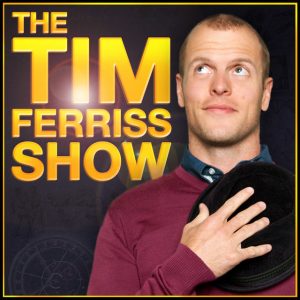

In this wide-ranging conversation, Tim Ferriss and Andrew Huberman revisit some of the most talked-about topics in health and performance—from minimalist strength training and neuroplasticity to psychedelics, peptides, and the future of AI-driven medicine. What emerges is not a list of hacks, but a set of guiding principles for how to think about the body, brain, and behavior.
You have to shut up, suit up, and show up. Stop complaining. Somebody’s definitely suffering more than you. Be grateful for something. You’re alive.
— Andrew Huberman, quoting psychoanalyst Jim Hollis
That line sets the tone: discipline and gratitude first, then space to reconnect with what truly matters.
The Dark Wizard: Energy, Competition, and Beauty
The conversation opens with a reflection on The Dark Wizard, a documentary about climber and wingsuit pioneer Dean Potter. Huberman describes Potter as a case study in channeling intense energy—sometimes manic, sometimes depressive—into extraordinary feats.
When you are in competition with other people, it’s a misuse of the energy that can harm you. But when you are seeking what he calls just seeking beauty… that’s when the really impressive feats land.
— Andrew Huberman
The takeaway: competition can distort performance; pursuing “beauty” or pure experience can unlock it.
Minimalist Strength Training: The Dorian Yates Approach
A significant chunk of the discussion focuses on training philosophy. Huberman recounts training with six-time Mr. Olympia Dorian Yates, whose “Blood and Guts” approach emphasized low volume, high intensity.
Key elements of the Yates-style split Huberman follows:
- Legs (once/week directly): Leg extensions, hamstring curls, belt squats, hack squats—2–3 hard sets per exercise, often to failure.
- Chest & Back + Neck (once/week): Incline press, weighted dips, rows, chins, neck work on a four-way machine.
- Shoulders & Arms (once/week): Presses, curls, triceps extensions, bench dips.
- Cardio: Three sessions per week (one long slow, one HIIT, one moderate).
- Recovery: At least one full rest day after legs; optional light cardio the next day.
You think you’re training to failure. You’re not training to failure… If somebody really put a gun to your head and said, ‘Curl that bar one more time or I’m going to kill your family,’ you’d curl the bar.”
— Andrew Huberman
Huberman notes that while recent hypertrophy research favors higher volume, those studies often ignore concurrent cardio and life stress. His hybrid approach—direct stimulation once a week, indirect stimulation a second time—has kept him progressing into his 50s.
Psychedelics: Plasticity, Not Panacea
Both have personal experience with psychedelics, particularly MDMA and psilocybin, in clinical or semi-clinical settings. Huberman describes using MDMA followed by high-dose psilocybin as “the hardest work I’ve ever done.”
There is no way whatsoever that a therapist was going to sit down and go, ‘Hey, what’s ever on your mind today? Let’s talk about what didn’t happen.’
— Andrew Huberman
For him, the combination revealed not just past traumas but “the things that didn’t happen” and left him with a clear mission afterward.
Ferriss frames psychedelics as tools that open windows of neuroplasticity:
When you induce plasticity… you’re heating up the clay. That doesn’t immediately mean… you’re going to turn out better than you were before. You have to be very cautious about how you reshape the clay.
— Tim Ferriss
They agree: the compound is only the catalyst; the real work happens in the weeks after.
Peptides: Hype, Hope, and Caution
The conversation moves to peptides—short chains of amino acids that the body already produces. Huberman breaks them into categories:
- GLP-1 agonists (e.g., semaglutide, tirzepatide): Powerful for weight loss, but can cause muscle loss and nausea.
- Growth hormone secretagogues (e.g., sermorelin, CJC): Modest effects on sleep and recovery; Huberman stopped after noticing elevated PSA.
- Healing peptides (e.g., BPC-157, TB-500): Promising animal data for tissue repair, but no published human trials.
- Miscellaneous (e.g., epitalon, pinealon): Early-stage, anecdotal benefits for sleep and circadian adjustment.
Absence of evidence does not equal evidence of absence… No documented adverse events doesn’t mean they’re safe—it just means they haven’t been around long enough. — Andrew Huberman
Both caution against casual use, especially from gray-market sources, and emphasize hygiene if injecting.
Sleep, Light, and Cortisol: The Bookends of the Day
Huberman reiterates a core principle from his work:
You want high cortisol in the morning, low cortisol at night. That’s the optimal setup.
— Andrew Huberman
Morning sunlight, caffeine, hydration, and exercise all help spike morning cortisol, which in turn supports low nighttime cortisol and better melatonin release. He also shares practical sleep tips:
- Cool room early, warmer toward morning to boost REM.
- Alpha-GPC before late workouts can support REM without disrupting sleep.
- Exhale-emphasized breathing during the day improves nighttime HRV.
AI, Wearables, and “Writing to the Nervous System”
Looking ahead, both are excited about AI as a personal health tool. Huberman describes uploading genomes, wearables data, and lab PDFs into LLMs to surface insights that even top doctors missed.
The real holy grail of AI is AI built on neural activity, not based on the internet.”
— Andrew Huberman, citing neurosurgeon Eddie Chang
He predicts the first major breakthrough in “writing to the nervous system” will be in sleep—citing an MIT sleep mask that uses subtle electrical stimulation to induce sleep in under six minutes by triggering specific eye movements.
Protocols: An Operating Manual for the Human Body
Huberman previews his upcoming book, Protocols: An Operating Manual for the Human Body, structured into seven “minibooks”:
- Sleep – Science-backed protocols ranked by impact.
- Exercise – Mobility, cardio, and resistance training principles.
- Stress – Tools for mitigation and resilience.
- Light – Circadian biology, long-wavelength light, and mitochondrial health.
- Neuroplasticity – How to learn harder things, faster.
- Personal Development – Including a science-based approach to grief.
- Shut Up, Suit Up, Show Up – Balancing role fulfillment with reconnecting to “heart’s desires.”“Simple not easy. Simple not easy.”
— Andrew Huberman, on the core message of the final chapter
Parting Thoughts
The episode closes with mutual respect and a reminder to listeners:
Until next time, be a bit kinder than is necessary to others… but also to yourself.
— Andrew Huberman
This recap is based on Andrew Huberman’s appearance on The Tim Ferriss podcast. For the full episode, click on the YouTube link at the top or listen wherever you get your podcasts.