From War-Torn Belgrade to GOAT: Novak Djokovic on Ending Self-Doubt and Finding Purpose After 24 Slams

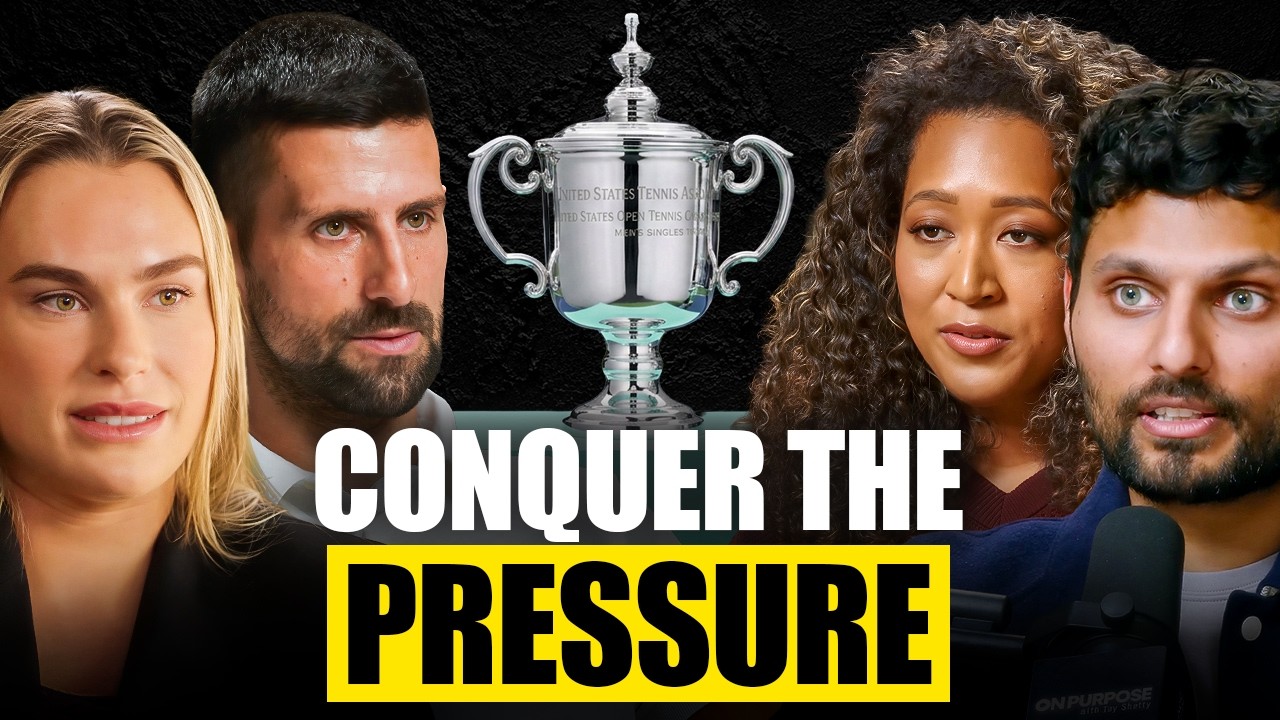
In a wide-ranging return to Jay Shetty’s On Purpose podcast, Novak Djokovic opened up about the inner battles behind his record-breaking career — from childhood scarcity and paternal pressure to spiritual practice, injury, and the transition from challenger to legend.
“Not having success is not an option.”
Djokovic traced his relentless drive to a moment at age 12, when his father placed 10 Deutsch marks on the table and explained it was all the family had for five people.
That’s where it hit me… not having success is not an option. I have to succeed. It’s basically a matter of existence, a survival of my family.
That survival mindset, he said, still fuels him — even after 24 Grand Slams and years at world No. 1.
The inner game: prayer, breath, and surrender
When Shetty asked what it truly takes to become “Novak Djokovic,” he pointed to a daily spiritual and mental routine that began in childhood with his first coach, who introduced visualization, classical music, and journaling.
It’s a consistent practice. It’s prayer work, mindfulness, meditation, conscious breathing… It requires more responsibility from you on a daily basis to prepare yourself for the biggest battle.
He also spoke candidly about reading The Power of Surrender and Letting Go, admitting that surrender is hard for him — especially outside his relationship with the divine.
“I just want to be left alone.”
On handling loss, Djokovic was strikingly honest about needing solitude immediately after a defeat.
Right after the match… I just want to be left alone. I don’t like the chitchat, the small talk of trying to lift my spirits up right after the match.
He described needing hours alone — sometimes a day, sometimes a week — before he can socialize again, and emphasized that even elite athletes wrestle with negative thoughts.
You cannot convince me that there is a single person on this planet… that is not experiencing some negative thoughts.
The difference, he said, is training:
I probably have more negative thoughts… The difference between you and me is my training and my ability to not stay in that state… for a long time.
From new kid to legend: playing the next generation
Djokovic reflected on the psychological shift from looking up to giants like Sampras, Federer, and Nadal to now being the veteran facing young challengers.
He recalled a three-year slam drought before 2011, when he overhauled his diet (cutting gluten, dairy, and refined sugar) and mental patterns, sparking a 40+ match unbeaten run and his first No. 1 season.
I changed rackets, team members… I did everything I could to find the right formula.
Now, with Federer and Nadal retired, he says part of him “left with them,” but he sees a new responsibility: mentoring the next wave.
I’m here for them to share my experience… It’s also my responsibility.
Injury, doubt, and proving people wrong
One of the most vivid stories was his 2024 Wimbledon run after a meniscus surgery. His own physio told him not to even think about playing — a comment that backfired.
He triggered me… For me what I heard is: ‘Okay, thank you for giving me the task.’ Now I have a challenge on my hands. All I needed is that.
He returned to reach the final, then won Olympic gold in Paris weeks later, calling it the pinnacle of his career — surpassing even his first Wimbledon.
Winning a gold medal for my country in Olympics in Paris 2024 would be the best moment… even better than winning Wimbledon for the first time.
His worst day on court? The first-round loss at the 2016 Rio Olympics, when he felt his “whole world collapsed.”
Rivalry, hostility, and rewriting the crowd’s chant
Djokovic spoke about often playing in “hostile” stadiums, especially against Federer and Nadal, and how he learned to flip that energy.
I was convincing myself… that they were cheering ‘Novak, Novak, Novak.’ That’s what I was hearing.
He linked this to training the subconscious mind, which he said controls about 95% of daily behavior.
Creating your own reality and convincing yourself… training your subconscious mind that this is exactly what you want to hear. It is possible, but it takes an effort.
Vulnerability, masculinity, and crying after losses
Pushing back against the idea that men in sport must hide emotion, Djokovic praised Cristiano Ronaldo for still crying after defeats.
When you’re crying, you are often regarded as a very weak man… I changed that about 10 years ago.
He admitted he’s cried many times in locker rooms and on court, especially after losses for Serbia in the Davis Cup and Olympics.
When you lose, you’re like… the whole world collapsed.
Life beyond tennis: Sicha, pods, and legacy
Djokovic previewed his wellness brand, Sila, starting with hydration and expanding to magnesium, sleep, nootropics, and gut formulas — products he and his family already use.
I don’t want this brand to be just one of the many out there. Every ingredient… needs to be 100% best quality that is out there.
He also detailed Regenesis Pod, a multi-sensory recovery capsule combining Faraday shielding, light therapy, PEMF, sound, and more — born from his years of traveling with a suitcase of recovery gadgets.
My dream is to have that in every airport… a healthy quick fix to a modern fast-paced lifestyle.
For him, these ventures are about legacy, not just business.
It’s really about how you make your mark in the world. What’s the legacy? What do you leave behind?
Final Five highlights
- Best advice: “Live the life in the present moment. Learn from the past. Live in the present and work for the future.”
- Worst advice: “If someone does bad to you, do 10 times worse to them.”
- Power of his wife, Jelena: “She’s my rock… the only one… able to tell me things that I maybe don’t want to hear.”
- Best day on court: Olympic gold, Paris 2024.
- Worst day on court: First-round loss, Rio 2016 Olympics.
- Toughest opponent mentally: “By far, myself.”
- Toughest opponent physically: Rafael Nadal — especially their 5h53m 2012 Australian Open final.
- One law for the world: Harsh penalties for destroying nature, plus a culture of greeting every person you pass to foster empathy.
Key takeaways
Djokovic’s story reframes “success” as an ongoing negotiation between survival instincts, spiritual practice, and the courage to feel deeply in public. For creators, founders, and athletes building in the spotlight, his playbook is clear:
- Turn scarcity and pressure into purpose, not just performance.
- Build daily rituals that survive wins and losses.
- Allow yourself to be affected — then train your recovery.
- Use rivalry and hostility as fuel, not fate.
- Design your post-peak legacy while you’re still in the arena.
This recap is based on Novak Djokovic’s appearance on the Served with Andy Roddick podcast. For the full episode, click on the YouTube link at the top or listen wherever you get your podcasts.