

Professor Chang Predicts a Fracturing World—and Explains Why His Hope Still Starts With Family


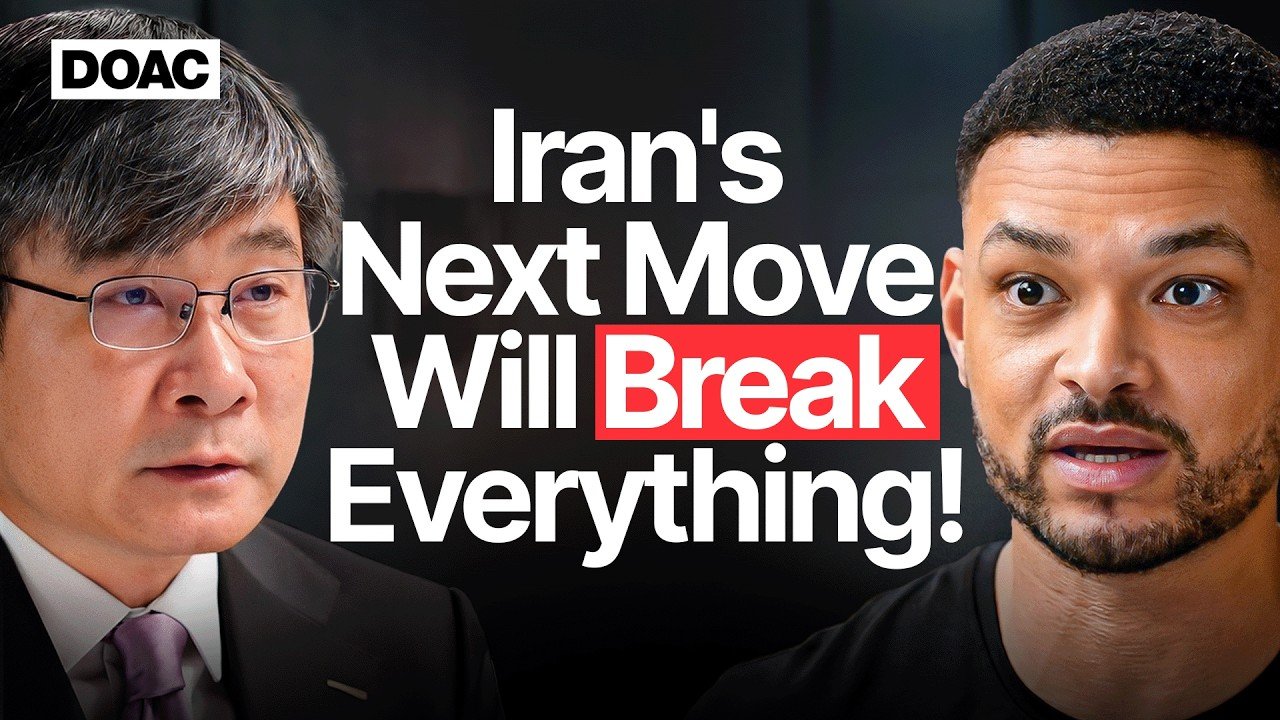
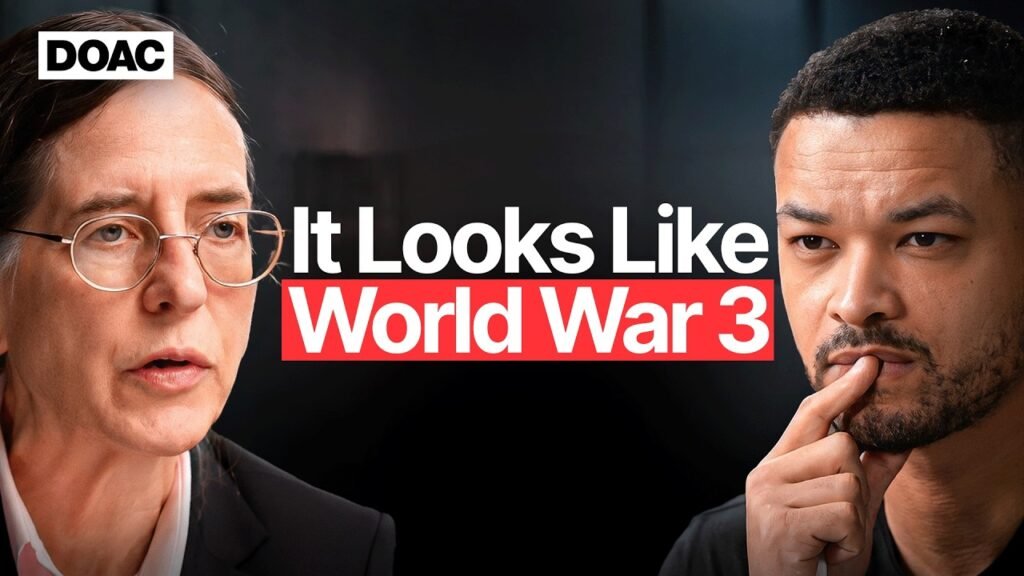
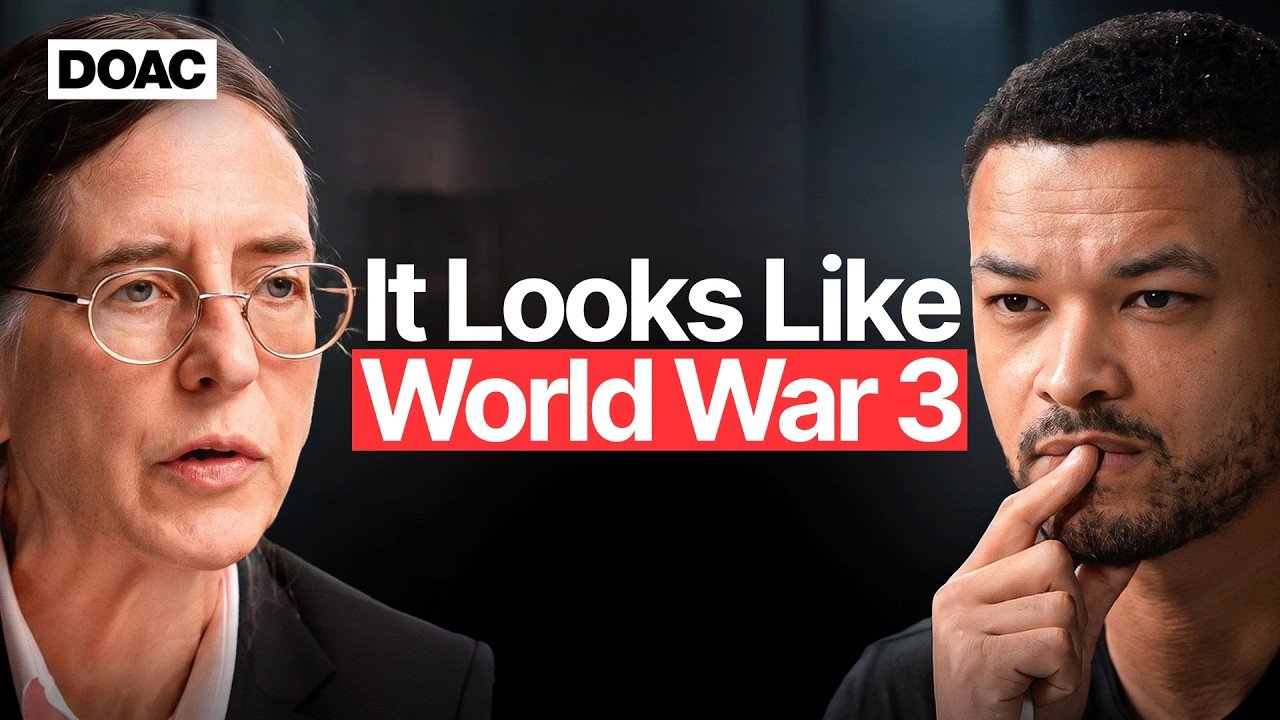
In a sweeping conversation with Stephen, geopolitical analyst and Yale-educated scholar Professor Jiang Xueqin connects global supply chains, escalating conflicts, political polarization, and AI to a stark prediction of civilizational decline. But his answer to uncertainty is unexpectedly personal: faith, love, and the responsibility to speak honestly.
Professor Jiang’s warning begins with a semiconductor.
The tiny component, he argues, represents far more than technological sophistication. It embodies a world in which different countries supply materials, design chips, manufacture equipment, fabricate processors, and assemble finished products. That cooperation makes extraordinary innovation possible—and creates vulnerabilities when nations stop cooperating.
From that starting point, Jiang builds the interview’s central argument: the international networks that support modern prosperity could unravel as wars expand and governments prioritize national self-sufficiency.
His forecasts are sweeping, sometimes provocative, and frequently challenged by Stephen. They range from an attack on American financial infrastructure to a hypothetical siege of New York City—and, in an unexpected detour, Lionel Messi becoming president of Argentina.
These are Jiang’s predictions, not established outcomes. The conversation is most revealing when it moves beyond those headlines to the worldview connecting them: a belief that material progress depends on cooperation, while human purpose depends on something deeper than progress itself.
The Global Cooperation Hidden Inside a Computer Chip
Jiang summarizes his understanding of innovation in a simple formula:
Technological progress is correlated with specialization times globalization.
— Professor Jiang
In his account, countries advance technologically because they do not have to do everything themselves. They develop specialized capabilities and exchange the results through international trade.
He uses semiconductor production to illustrate that interdependence, describing a network spanning American chip designers, Asian manufacturers, European equipment suppliers, and Chinese materials and assembly operations.
Jiang places that network within a wider financial and security system. He describes dollar-denominated trade, the recycling of export earnings into American assets, and U.S. military power as mutually reinforcing foundations of globalization.
His concern is that conflict could reverse the process. Countries pursuing self-sufficient supply chains would need to become more generalist and less internationally integrated. In his framework, that would undermine the conditions that allow technological progress.
It is a much stronger claim than saying disruption could make electronics more expensive. Jiang argues that the world could lose the cooperative capacity required to keep advancing.
Why He Reaches for the Bronze Age Collapse
When Stephen questions the severity of the word “collapse,” Jiang does not soften it.
We will live through over the next 20 years the collapse of civilization itself.
— Professor Jiang
His historical comparison is the Bronze Age collapse. As Jiang presents it, an interconnected trading system became vulnerable to overlapping crises, with disruption spreading across societies rather than remaining confined to one region.
The analogy matters because he does not imagine a straightforward transfer of leadership from one superpower to another. He questions whether a declining American-led order would leave behind a stable system that another country could simply inherit.
Stephen introduces a different perspective: people who have grown up in relative security may struggle to imagine that security disappearing.
Jiang responds by contrasting that experience with the lives of people exposed to war and instability. His broader point is that the expectation of uninterrupted peace is not universal—and should not be mistaken for a guarantee.
How a Regional War Could Become a Global Economic Crisis
The Middle East sits at the center of Jiang’s explanation of how disruption could spread.
He describes a possible chain reaction: attacks threaten shipping routes and energy infrastructure; uncertainty undermines shipping insurance; trade becomes harder to sustain; and manufacturing economies lose access to essential inputs.
The global trade system is built on confidence.
— Professor Jiang
In that scenario, the consequences would extend beyond oil prices. Jiang links energy disruption to manufacturing, fertilizer availability, food production, and the financial flows supporting the American economy.
He also outlines a potential escalation involving attacks on Iranian civilian infrastructure. Stephen repeatedly presses him on the human consequences and whether leaders could instead withdraw or declare victory.
Jiang’s answer rests on his interpretation of power: leaders who see military credibility as essential to their position may escalate rather than accept an outcome that looks like defeat.
Still, he acknowledges uncertainty about specific decisions. When asked whether Iran would pursue the coordinated disruption he describes, he says there are political factors he does not know. That qualification is important: his confidence about escalation does not amount to knowledge of a particular operational plan.
Immigration, Aging Societies, and the Limits of Robots
The conversation then turns to a dilemma Jiang sees facing wealthier countries: resistance to immigration alongside growing demand for workers to support aging populations.
Stephen proposes robots as an alternative.
Jiang responds that automation is also dependent on international supply chains. Robots require materials, components, energy, and manufacturing capacity—not just increasingly capable software.
His argument is that countries cannot necessarily reject migration, retreat from trade, and assume automation will seamlessly fill the labor gap.
He connects that tension to political polarization, predicting that governments could face competing pressures to restrict immigration and meet essential labor needs. His further suggestions of civil conflict remain speculative, rather than inevitable consequences demonstrated by the discussion.
Three Predictions—and the Qualifications Behind Them
Jiang’s most attention-grabbing forecasts arrive as three distinct scenarios.
A Conditional Siege of New York City
His first scenario begins with Donald Trump remaining president for a third term.
Jiang imagines major cities resisting federal authority, followed by escalating confrontation and a possible siege of New York City. Stephen challenges the premise, pointing to the constitutional restriction on being elected president more than twice and disputing the suggestion that a president can simply suspend the Constitution during an emergency.
The exchange ends with a $100 bet on whether Trump will still be president on January 21, 2029.
The distinction matters: the siege forecast depends on an extraordinary political premise. The conversation does not establish that Jiang’s proposed routes to a third term are legally viable.
An Attack on Financial Infrastructure
His second prediction is explicitly conditional: if the United States experiences another attack comparable in psychological impact to 9/11, Jiang believes financial infrastructure could be the target.
He imagines people suddenly unable to access their money, with uncertainty about recovery producing widespread fear and anger.
Stephen questions the feasibility of disabling financial systems on that scale. Jiang does not provide technical evidence that the scenario could unfold as described; he presents it as a possibility he would not dismiss.
Messi as President of Argentina
The third prediction is the most unexpected: Lionel Messi becoming president of Argentina.
Jiang connects the idea to a speculative account of Argentina’s relationships with the United States and Israel, migration, and the Falkland Islands. He suggests Messi’s popularity could help secure public acceptance for major political changes.
The interview supplies no evidence of a Messi candidacy or of the coordinated political arrangement Jiang imagines. It is best understood as a conjectural scenario, not a reported development.
China, Japan, Russia, and the Search for Leverage
Jiang extends his framework to East Asia and Europe.
He portrays Taiwan and access to maritime resources as potential sources of confrontation between China and Japan. Yet under Stephen’s questioning, he distinguishes conflict and coercive leverage from the narrower claim that China would directly attack Japan.
On Russia, he argues that European support for Ukraine could encourage Moscow to seek ways of spreading instability beyond the battlefield. His account emphasizes pressure, mobilization, and attempts to weaken an opponent’s political willingness to continue fighting.
Across both discussions, Stephen returns to the same challenge: why must escalation follow? Could leaders negotiate, make a deal, or step back?
That tension gives the interview its structure. Jiang emphasizes forces he believes push states toward confrontation; Stephen keeps testing whether those forces leave more room for choice than Jiang allows.
AI’s Threat Goes Beyond Surveillance
Jiang applies the same supply-chain argument to artificial intelligence. He predicts that geopolitical fragmentation could constrain progress toward artificial general intelligence while encouraging governments to deploy existing AI for surveillance and control.
But when Stephen asks whether surveillance is his biggest concern, Jiang identifies something more personal.
The big risk I see is how AI can cheapen the human experience.
— Professor Jiang
He accepts that computers may become better at particular intellectual tasks. What he rejects is the idea that outperforming humans at those tasks settles the question of human value.
For Jiang, love, imagination, kindness, and spiritual development remain central. His concern is that fascination with machine intelligence could distract people from cultivating those qualities.
Why His Answer to Uncertainty Is Family
After spending much of the conversation describing systemic breakdown, Jiang gives an unexpectedly intimate answer when asked what ordinary people should do: believe in God and focus on family.
He presents this as a relatively recent personal transformation. Educational achievement and upward mobility had once reinforced his belief in meritocracy. Later disillusionment pushed him toward a different understanding of meaning.
Faith, in his telling, is not permission to disengage.
If you truly believe in God and you believe there’s a plan, then you have to take action and you have to participate in the world.
— Professor Jiang
He describes public speaking as part of that responsibility, while admitting that fear, doubt, and paralysis remain his biggest personal challenges.
His children provide the counterweight to those fears. Asked whether he worries about his son’s future, he says the love he and his wife have given him provides confidence to live fully—even in an uncertain world.
The interview’s final emotional turn is therefore not another prediction. It is Jiang’s distinction between loving someone and trying to control what happens to them.
Love is about trust. Love is about liberation. Liberation from your own anxieties and liberation from the need to control others.
— Professor Jiang
This recap is based on Professor Jiang Xueqin’s appearance on the Diary of a CEO podcast. For the full episode, click on the YouTube link at the top or listen wherever you get your podcasts.