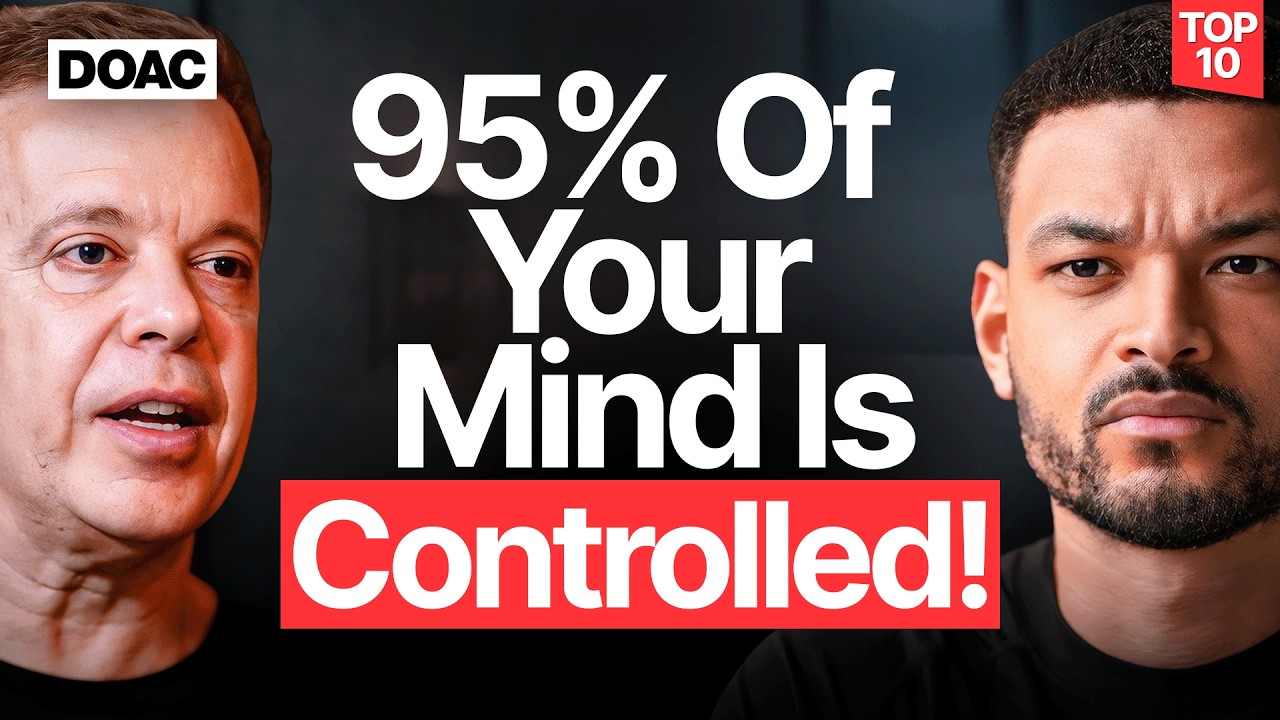

Andrew Huberman on Daily Habits, Mental Resilience, and Why He Prays Every Night



Andrew Huberman’s approach to better health starts with ordinary actions: drink water, get outside, move your body, do something mentally demanding, and make room for sleep. But in his conversation with Steven Bartlett on The Diary of a CEO, the discussion stretches beyond daily routines into a more personal question: how much of life should we try to control?
Discussing his book, Protocols: An Operating Manual for the Human Body, Huberman presents his habits as parts of an interconnected system rather than isolated wellness tricks. Sleep affects the next morning’s energy. Daytime activity influences the evening. The way someone handles stress can shape what happens long after the stressful moment ends.
The conversation’s central tension is between discipline and surrender. Huberman advocates deliberate effort, but he also describes prayer and stepping away from constant achievement as important parts of his life.
These are gears in a larger system. One moves, the other ones move.
— Andrew Huberman
Start With the Foundations, Not the Extras
Bartlett opens by asking why Huberman chose the particular protocols he wants to discuss. Huberman says they are the habits he believes will make the biggest difference to mental health, physical health, and performance—and that they can be done at no additional cost or within an existing budget.
His morning sequence begins with hydration, daylight, and movement. He describes drinking water after waking, getting outdoors, and trying to exercise early in the day.
The broader point is consistency, not an elaborate collection of products. Even when the conversation later turns to supplements and experimental interventions, Huberman returns to behavior as the foundation.
The behavioral tools are the foundation.
— Andrew Huberman
He also acknowledges that people respond differently. Someone already feeling energetic and sleeping well may not notice the same change as someone struggling with those basics. His argument is to examine the current routine and identify useful improvements, rather than optimize every minute.
Cortisol Is More Than a Wellness Villain
One of Huberman’s recurring arguments concerns cortisol, which he believes is too often discussed as something to suppress.
He describes a daily pattern in which cortisol rises around waking and falls toward nighttime. In his explanation, the goal is not simply “less cortisol,” but an appropriate rhythm of activation and recovery.
When Bartlett asks how to think about the hormone, Huberman emphasizes energy mobilization and preparation.
It’s a preparation hormone. You’re preparing for adversity, but also great things.
— Andrew Huberman
That distinction leads to a discussion about different kinds of stress. Huberman contrasts a workout, which has a relatively clear beginning and end, with psychological stress that can keep resurfacing through rumination.
Bartlett tests the idea with a practical question: would reading upsetting emails first thing in the morning count as a useful cortisol boost? Huberman’s response highlights the limitation. The problem is not only the immediate reaction, but the thoughts that may continue circulating afterward.
Bright Days, Darker Nights
Light is another thread connecting the conversation’s morning and evening routines.
Huberman recommends getting outdoor daylight early in the day and reducing bright light toward bedtime. He distinguishes between light reaching the eyes to influence the body’s daily timing and the separate research he discusses on light exposure to the skin.
He also argues that spending time outdoors need not mean buying a red-light device. When Bartlett anticipates listeners rushing to purchase one, Huberman answers that it is not necessary.
His practical message is to make outdoor time part of the day: a walk, a balcony break, or a chance to leave the building.
The discussion also contains expansive claims about light, metabolism, hormones, and disease risk. Those are Huberman’s interpretations of the research he cites, not findings independently established by this recap. His daylight advice should not be read as encouragement to stare directly at the sun or abandon sun protection.
Exercise for a Capable Body—and Keep Moving Between Workouts
Huberman describes an exercise routine designed for broad capability rather than excellence in one discipline.
His preferred structure alternates resistance training and cardiovascular exercise, with three sessions of each across the week and a rest day. The cardiovascular sessions vary: one longer and easier, one moderate, and one short and intense.
For resistance training, he emphasizes movements that involve multiple muscles and joints.
Although he favors exercising early, he explicitly says afternoon exercise is acceptable. The conversation leaves room for schedules that do not accommodate an ideal morning routine.
Later, he returns to movement outside formal workouts. He describes pacing during calls, taking stairs, walking with his team after recording, and taking short walks after meals.
Discussing post-meal movement, he suggests that five to ten minutes of walking can help buffer glucose rises. His emphasis is on a habit people can realistically repeat, rather than an awkward exercise prescription they are unlikely to follow.
Train the Pause Before You React
The conversation shifts from physical fitness to emotional control through Huberman’s discussion of the anterior midcingulate cortex, a brain region he associates with persistence through difficulty.
Bartlett says hearing Huberman discuss this area changed his relationship with hard tasks. Instead of treating discomfort solely as something to escape, he began seeing deliberate challenges as an investment in handling future challenges.
Huberman says those challenges need not be physical. Learning a language, dancing, or doing something that creates internal resistance can also fit the idea.
But he distinguishes voluntary discomfort from enduring harm.
We need to train for discomfort so that the little things don’t feel so big.
— Andrew Huberman
Another theme is restraint: recognizing an impulse without immediately acting on it.
Huberman illustrates this with a recent misunderstanding online. He considered sending a text at night, decided against it, and learned the next morning that the situation was different from what he had assumed.
The anecdote gives the discussion a recognizable application. Sometimes the most useful response to stress is to wait before speaking.
A Breathing Tool for Stress in the Moment
Huberman distinguishes between habits that support resilience generally and tools someone can use when already overwhelmed.
He describes the “physiological sigh”: an inhale, a second shorter inhale, and a long exhale. He discusses research comparing brief daily breathing practices with meditation and says the sigh-based practice produced particularly strong benefits in that study.
For him, the appeal is immediacy. Good sleep and supportive relationships matter, but a person about to walk onstage or receive difficult news may also want something usable in that moment.
Real time tools for stress are what we all need.
— Andrew Huberman
He also describes an eye-movement sequence he personally uses when trying to return to sleep. Importantly, he introduces that technique as having indirect scientific support. It belongs in a different evidence category from an established treatment for sleep problems.
Learning Should Involve Some Friction
Huberman’s advice on focus is deliberately effortful: spend a sustained period doing something mentally challenging, and remove the phone from the room.
He distinguishes practicing an existing skill from acquiring a new one. When learning something unfamiliar, he argues, genuine attempts and mistakes are part of the process—not signs that the session has failed.
He also champions self-testing over simply rereading material.
As an example, he describes asking an AI tool to generate neuroscience questions, answering them, and checking the gaps in his knowledge. Bartlett immediately suggests doing something similar with the episode’s transcript.
The useful distinction is between recognizing information and being able to retrieve it. In Huberman’s account, a test can become a learning tool rather than merely a judgment of performance.
Prayer and the Relief of Not Controlling Everything
The conversation’s most personal section begins when psychedelics lead Bartlett and Huberman into questions about perception, reality, and religion.
Asked directly whether he believes in God, Huberman answers, “Absolutely.”
He says faith was present earlier in his life but that he often kept prayer private. More recently, he has embraced it openly and describes praying every night for nearly three years.
It relieved me of the pressure to control everything internally and externally.
— Andrew Huberman
Huberman does not present neuroscience as proof of God’s existence. He explicitly acknowledges that limits in human perception do not, by themselves, establish that conclusion.
Instead, he describes faith through personal experience: greater peace, a willingness to live with uncertainty, and moments he interprets as answers to prayer.
He says he prayed before the interview, asking for humility, clarity, and help moving his ego out of the conversation.
Fulfill Your Roles, but Make Space Outside Them
Toward the end, Huberman draws on a conversation with Jungian analyst James Hollis to describe two sides of personal development.
The first involves responsibility: prepare, practice gratitude, and fulfill roles that matter to other people. Huberman recounts Hollis’s blunt formulation: “Shut up, suit up and show up.”
The second involves stepping outside those roles long enough to listen to yourself.
That might mean sitting quietly, drawing, listening to music, or spending time outdoors without trying to accomplish something. The purpose is not another productivity target, but space to notice desires and feelings that constant activity can obscure.
On finding a calling, Huberman rejects the idea that clarity must arrive before action.
You find it while working your butt off doing something else.
— Andrew Huberman
His account leaves room for changing direction. He describes thinking in five-year chapters rather than expecting one permanent passion to explain the rest of his life.
Where Personal Experimentation Needs a Clear Boundary
The episode also covers supplements, peptides, and Huberman’s experiences with psychedelics.
These sections differ from the discussion of everyday routines. Huberman describes self-experiments, reports anecdotes, and acknowledges uncertainty around several interventions. He says hormone therapies, peptides, and psychedelics are not covered in his book, distinguishing those emerging areas from what he considers its established foundations.
His personal supplement choices and reported experiences are not individualized recommendations for listeners. The same caution applies to claims about reducing sleep needs or using experimental substances to alter sleep.
That boundary matters to the recap’s larger story: the conversation is most accessible when it focuses on repeatable habits, deliberate effort, and room for reflection—not when personal experimentation becomes a universal prescription.
Editorial note: Health claims are attributed to the speakers and have not been independently verified. It is a podcast recap, not medical advice.
This recap is based on Stanford Neuroscientist Andrew Huberman’s appearance on the Diary of a CEO podcast. For the full episode, click on the YouTube link at the top or listen wherever you get your podcasts.