

James Clear on Building Habits That Last: Make It Easy to Start—and Easier to Keep Going


The Atomic Habits author explains why systems beat goals, how small actions shape identity, and why consistency depends more on flexibility than perfection.
A missed workout can become a missed week. A writing session can disappear while you debate what to write. A plan to change your life can stall because the first step feels too small to count.
For James Clear, these are precisely the moments where habit-building begins—not with a dramatic transformation, but with making the next useful action easier to take.
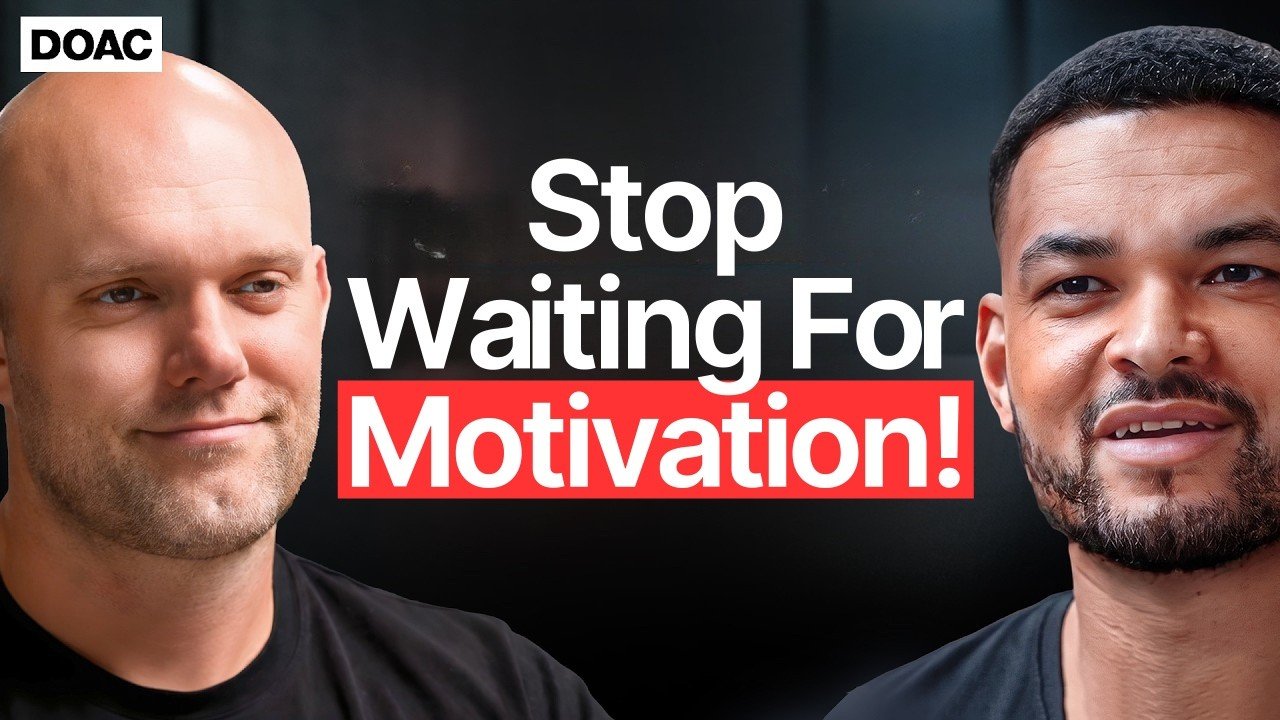
In this podcast conversation, the author of Atomic Habits explores what helps people turn intentions into repeatable behavior. His central argument is that lasting change depends less on ambitious goals or constant motivation than on the conditions surrounding everyday actions.
The thread running through the discussion is consistency. But Clear’s version is not rigid adherence to a perfect routine. It means learning to start, adapting when circumstances change, and returning quickly when things go wrong.
A habit must be established before it can be improved.
Make Your Habits Enjoyable, Not Just Admirable
Asked what he would add to Atomic Habits, Clear offers a question: “What would it look like if this was fun?”
People often choose habits because they believe they should do them. Exercise becomes synonymous with going to the gym, even when another activity might be more appealing. Clear suggests listing the different ways to pursue the underlying aim, then choosing a version you actually want to repeat.
That does not mean every workout, writing session, or learning activity will feel effortless. It means enjoyment deserves a place in the design.
Someone who finds an activity engaging has a reason to continue when it becomes difficult. Someone who resents it from the beginning has another reason to stop.
The person who’s having fun is actually the person who’s dangerous.
Clear connects this to a phrase he attributes to author David Epstein: “Grit is fit.” Perseverance, in this framing, is not simply a character trait you force into existence. It becomes easier to express when the activity fits your interests and strengths.
Master the Start Before Optimizing the Performance
Clear describes a period when his workouts became inconsistent. The problem, he realized, was not the exercise itself. It was everything that prevented him from beginning.
Hiring a trainer who arrived at a fixed time changed those conditions. The appointment still interrupted his day, but it made starting more reliable.
He applies the same thinking to writing. Because choosing a topic can become his biggest obstacle, he sometimes leaves the first sentence in a document before finishing for the day. When he returns, he can continue rather than reopen the debate about what to write.
The practical question is not only, “How do I do this well?” It is, “What makes the first action difficult?”
Clear’s two-minute rule addresses that friction: shrink the habit to an opening action that takes two minutes or less.
- Reading more can begin with one page.
- Practicing yoga can begin with taking out the mat.
- Writing can begin with one sentence.
The small action is not supposed to deliver the entire result. It establishes the pattern that makes a larger effort possible.
Reduce the Scope, but Keep the Appointment
An ambitious routine can become fragile when anything less than the full version feels like failure.
Clear’s alternative is to preserve the habit while adjusting its size. If an hour-long workout becomes impossible, a shorter session still counts. If 30 minutes of writing no longer fits, use the time that remains.
Reduce the scope but stick to the schedule.
The distinction matters because a shortened session and a skipped session reinforce different patterns. One keeps the practice alive; the other can make disengagement easier.
Rather than designing a routine around your best day, Clear suggests asking what you can sustain on a bad one. That minimum becomes a floor—not a permanent ceiling.
It also changes the meaning of mental toughness. Sometimes toughness means doing less than planned without abandoning the commitment altogether.
Goals Set the Direction. Systems Shape the Result.
Clear distinguishes between the outcome you want and the process you follow.
A goal might be writing a book, getting fitter, or building a business. A system is the collection of repeated actions intended to move you there.
Goals provide clarity, but they do not explain the difference between people who succeed and those who do not. As Clear points out, competing athletes and job applicants often want the same outcome.
What happens between setting the target and reaching it matters.
Goals are best for people who care about winning once. Systems are best for people who care about winning repeatedly.
Clear does not dismiss luck, strategy, or misfortune. He explicitly acknowledges that habits are not the only influences on results. His emphasis is on putting attention into the parts of the process you can control.
One question helps expose a mismatch: “Can my current habits carry me to my desired future?”
Sometimes the answer is yes, and patience is required. Sometimes the answer reveals that the desired outcome and the actual lifestyle are moving in different directions.
The Four Laws Turn Intentions Into Something Practical
Clear explains his habit framework through four stages: cue, craving, response, and reward. He then translates those stages into four laws of behavior change.
| Law | What it means | Example from the conversation |
|---|---|---|
| Make it obvious | Put the prompt where you will notice it. | Keep a guitar on a stand rather than hidden in a closet. |
| Make it attractive | Give yourself a reason to look forward to the activity. | Choose a version of the habit that feels engaging. |
| Make it easy | Reduce the effort required to begin. | Scale the opening action down using the two-minute rule. |
| Make it satisfying | Create a positive signal after completing it. | Mark a tracker or move a paperclip to show progress. |
The first three laws help an action happen now. The fourth helps make it worth repeating.
For unwanted habits, Clear reverses the framework: make them invisible, unattractive, difficult, and unsatisfying.
His own example is leaving his phone in another room during the morning. When it sits beside him, he checks it frequently. When retrieving it requires a short walk, he often leaves it alone.
The change is small, but it interrupts the easy path into distraction. Clear also distinguishes this kind of everyday friction from addressing addiction; he does not present the examples as interchangeable.
Let Your Actions Build Your Identity
For Clear, repeated behavior does more than produce an external result. It supplies evidence about who you are.
One sentence does not finish a novel, but it supports the identity of someone who writes. One small workout does not transform a body, but it reinforces the practice of showing up.
Every action you take is like a vote for the type of person you wish to become.
This is why he recommends starting with action rather than waiting to feel confident. Repetition gives you something concrete to believe about yourself.
The same principle extends to social environments. A habit becomes easier to maintain when the people around you treat it as normal.
Join groups where your desired behavior is the normal behavior.
That does not necessarily mean ending existing friendships. Clear suggests finding a setting where a particular behavior can thrive—a class, a training group, or a community of people working toward similar aims.
Small Improvements Need Somewhere to Accumulate
Clear revisits the familiar illustration of getting 1% better each day, but adds an important qualification: life does not follow a compound-interest formula exactly.
The point is not to measure a precise daily percentage. It is to pay attention to direction, especially when the results remain difficult to see.
Time will magnify whatever you feed it.
He also warns that not every small improvement compounds. Some actions accumulate into something meaningful; others consume attention without building toward a larger result.
That makes reflection essential. Working harder is not always the answer if the work itself needs to change.
Clear describes reflection and review as a “meta habit”: a practice that helps you assess the others. It creates room to ask whether your systems still serve you—or whether they belong to an earlier season of life.
Consistency Requires Flexibility—and a Way Back
A routine that worked before parenthood, a new job, or another major transition may need to change shape.
Clear uses his writing as an example. Publishing articles, working on a book, and producing a shorter newsletter are different forms of the same underlying practice. Changing the format does not necessarily mean abandoning the habit.
Consistency is often adaptability. It’s flexibility.
The same flexibility matters after a lapse. Clear argues that the aim should not be a system that never fails, but a reliable way to recover.
What you need is a good plan for getting back on track.
A missed day becomes less significant when it remains a brief interruption rather than the beginning of a prolonged absence.
That brings the conversation back to its smallest unit: the next action. Faced with an overwhelming question about changing your life, Clear suggests narrowing the scale. What would make today better? What would make the next hour useful?
A meaningful life, in his telling, is not built by solving everything at once. It takes shape through small actions that fit together—and remain possible to repeat when life refuses to follow the plan.
This recap is based on Atomic Habits author James Clear’s appearance on the Diary of a CEO podcast. For the full episode, click on the YouTube link at the top or listen wherever you get your podcasts.