Barack Obama on IMO: Raising Good Men Takes More Than Teaching Boys to Be Tough


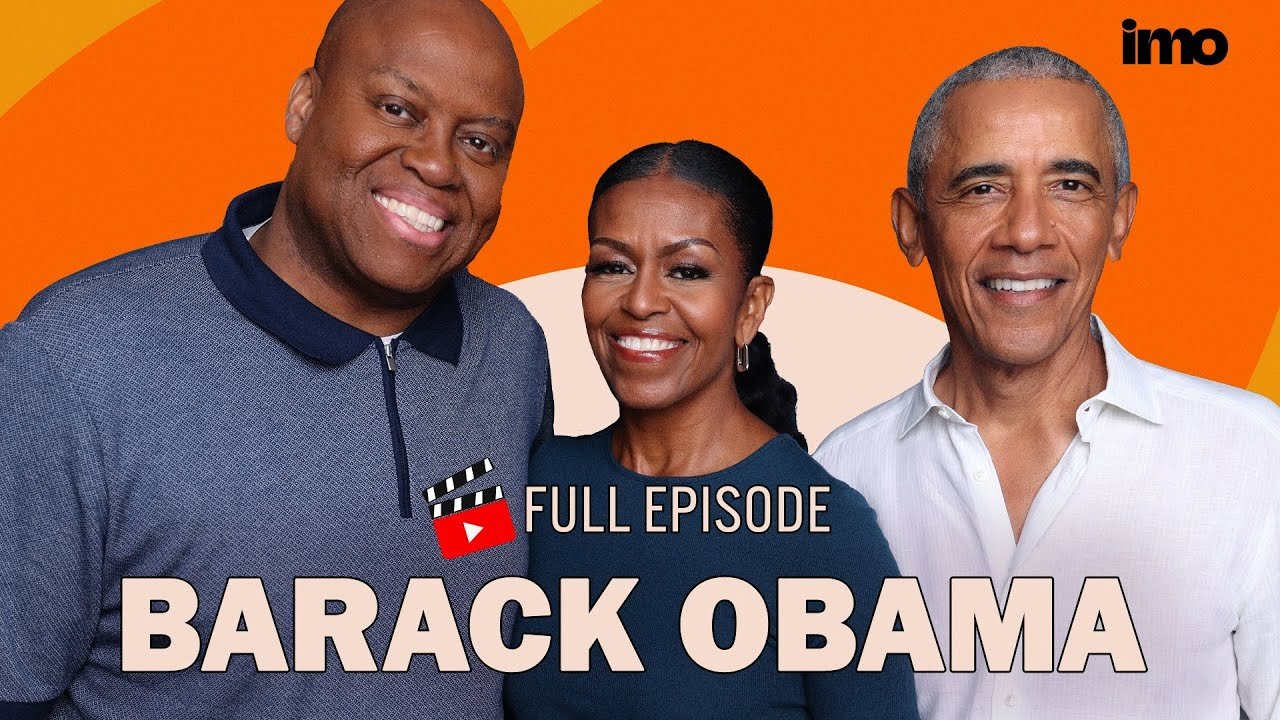
Joining Michelle Obama and Craig Robinson, Barack Obama reflects on fatherhood, emotional intelligence, and why boys need more ways to imagine the men they can become.
Barack Obama’s appearance on IMO begins with a joke about his marriage. It ends with a declaration of brotherly love. In between, the former president, Michelle Obama, and her brother Craig Robinson work through a question that connects their family stories to a much larger concern: How do you raise emotionally intelligent, competent men?
Their answer isn’t a single parenting technique. It involves unconditional love and clear expectations, friendships that require effort, role models beyond the immediate family, and enough unstructured time for children to tell adults what they are actually feeling.
Running through the conversation is a distinction Michelle keeps bringing into focus: Teaching boys how to behave in the world is not the same as helping them understand themselves.
First, a Little Marriage-Rumor Humor
Before the parenting discussion gets underway, Craig recounts a fan encounter in Wichita, Kansas. A woman asks for a photo, moves in for a side hug, and then quietly asks about Barack: “What did he do?”
The assumption, Craig explains, wasn’t simply that something had happened between the Obamas. It was that Barack must have done something wrong.
Barack wonders why Craig didn’t immediately tell her nobody had messed up. Craig’s answer gets a laugh: He wanted to keep the conversation going so he could tell them about it afterward.
Michelle responds to the speculation more directly. She acknowledges that their marriage has included difficult periods, but draws a clear distinction between experiencing hardship and wanting to leave.
There hasn’t been one moment in our marriage where I thought about quitting my man.
— Michelle Obama
She adds that their life together has included fun, adventure, and personal growth: “I have become a better person because of the man I’m married to.”
Barack, visibly moved in the exchange, asks her not to make him cry at the beginning of the show. The moment establishes the episode’s tone: affectionate and teasing, but willing to get serious about what relationships demand.
The Listener Question: Are We Raising Boys, or Just Loving Them?
The main discussion begins with a question from Emma, a listener in San Francisco who has three younger brothers and a one-year-old son.
She worries about the ideas reaching her brothers online and asks how parents can raise boys who recognize and reject oppressive or violent models of masculinity. Her question centers on a familiar formulation: Why do we “raise our girls” but “love our boys”?
There is so much dialog on raising strong, independent women, but how can we raise emotionally intelligent, competent men?
— Emma, IMO listener
Rather than immediately discussing the internet, Craig asks Barack to start with his own experience raising daughters.
Barack’s first answer is about choosing a partner. When young male staff members ask him about dating and relationships, he says, he encourages them to think beyond the immediate attraction: This may be the person who raises children alongside them.
For him, having Michelle as Malia and Sasha’s mother “made all the difference.”
Their shared approach combined unconditional love with structure. The girls had bedtimes, responsibilities, and boundaries. Their parents explained the reasons behind rules, but explaining did not mean endlessly negotiating.
The underlying goal was to raise adults—not simply manage children.
Fatherhood Began With the Night Shift
Michelle makes clear that Barack’s involvement did not begin when the children became old enough to hold conversations.
He changed diapers. He took responsibility for infant care. With Malia, they divided the work, and Barack’s tendency to stay up late made him a natural fit for the night shift.
For Michelle, sharing that responsibility also meant accepting that she could not supervise every detail of his relationship with their baby.
I can’t micromanage that relationship.
— Michelle Obama
She describes being able to go to bed knowing Barack could care for their daughter. In her telling, those early hours were not merely practical help for an exhausted mother. They helped establish a father-daughter bond that continued as the girls grew up.
The distinction matters to the larger conversation: An engaged father is not a secondary parent waiting for the stage of childhood he finds most comfortable. He builds the relationship by taking responsibility from the beginning.
Building a Model of Fatherhood Without a Father Nearby
Craig notes that Barack and the Robinson siblings came from very different backgrounds, yet arrived at many of the same values. Michelle and Craig recognize qualities in Barack that remind them of their father: honesty, consistency, humor, and calm.
Barack explains that he did not grow up with an obvious template for fatherhood.
His father left when he was two, and he met him only once afterward. He was raised largely by his mother and grandparents, with several years alongside his stepfather in Indonesia, whom he remembers as kind.
There was love around him, he emphasizes. What he lacked was a single, readily available example of how to be a dad.
Instead, he assembled an understanding of manhood from different people and experiences. Some of the messages available to boys in his generation were useful. Others—particularly the insistence that men should never cry, complain, or show vulnerability—were limiting.
One idea he retained was that strength should serve other people, rather than establish power over them.
You’re strong not to pick on people, right? Not to be a bully, not to dominate others. Instead, it’s strength in order to protect.
— Barack Obama
A Missing Passport in Jakarta—and an Early Lesson in Independence
Barack illustrates his childhood self-reliance with a story that still alarms Michelle.
At around 10 or 11, he recalls, his mother dropped him at the airport in Jakarta for a flight, only for him to discover that she had forgotten to give him his passport.
There were no mobile phones to resolve the problem. Believing she might stop at her office before leaving town, he arranged a ride there in a small rickshaw-style vehicle, despite having no money to pay the driver himself.
He caught her just as she was about to leave, retrieved the passport, and made his flight.
What stands out in his memory is not fear or a sense of abandonment. It is the satisfaction of solving the problem.
Michelle and Craig place that story within a broader discussion about how much independence children receive—and how difficult it can be to balance freedom with protection.
The episode does not turn the airport adventure into a parenting prescription. Instead, it exposes a tension: Children need opportunities to develop competence, but the adults raising them must decide what risks they can reasonably allow.
Michelle’s Challenge: What About a Boy’s Inner Life?
As Barack and Craig discuss responsibility, toughness, manners, and protecting others, Michelle points out what is missing.
Nearly everything they have described concerns a boy’s outward behavior.
Being polite, getting along with others, working hard, and staying out of trouble all matter. But none necessarily teaches a child what to do with hurt, fear, insecurity, or sadness.
It’s almost like you’re supposed to pretend like you don’t have an internal self.
— Michelle Obama
Craig recognizes the distinction. Growing up, he could discuss a problem with his father, but the conversation generally revolved around something that had happened and what to do about it. It was problem-solving, rather than an open-ended exploration of his feelings.
Barack says his young mother gave him a somewhat different experience. She talked about her emotions, which created room for him to discuss his own.
Books also helped. Reading, he explains, gave him access to other people’s inner lives and helped him develop a vocabulary for understanding his own.
His account connects emotional awareness with curiosity: learning to ask not only what happened, but how someone else might feel—and what is happening inside yourself.
Male Friendships Need More Than Good Intentions
The conversation moves from childhood emotions to adult friendship.
Barack describes the friends he made in high school as a kind of found family. Only later did he recognize that many were also children of divorced parents, raised by single mothers.
Those relationships taught him the value of having men he could trust and talk to. Maintaining them, however, required deliberate effort as careers, distance, and family responsibilities complicated their lives.
For his 50th birthday, Michelle brought friends from different periods of his life together at Camp David. The weekend’s competitions and games became the foundation for an annual gathering they called Camp Athlon—even after the event no longer took place at the presidential retreat.
The activities provided a reason to assemble. The emotional value came from what happened around them: conversations, shared experiences, and the reassurance of being with people who knew him beyond his public role.
Just creating some structures where guys can get together.
— Barack Obama
Craig says he, too, has become more intentional about calling friends rather than assuming the relationship can run indefinitely without attention.
Their point is not that every gathering needs a formal conversation about feelings. Sometimes the first step is making sure there is a gathering at all.
Boys Need More Than One Example of a Good Man
Returning to Emma’s question, Barack argues that even a loving, involved father cannot provide every model a boy might need.
He encourages parents to look for a broader community: relatives, family friends, places of worship, and community organizations where children can encounter different kinds of responsible adults.
He remembers being struck by the range of men in Michelle and Craig’s extended family. They had different personalities, occupations, and ways of moving through the world.
That variety showed there was no single approved way to be a man.
Not just exposure to one guy, one dad, no matter how good the dad is. He can’t be everything.
— Barack Obama
Barack also recalls a gay college professor who became a valued influence and challenged him when he said something ignorant. Such relationships, he suggests, can teach empathy while giving children a wider sense of where they might belong.
For a boy who is gay or nonbinary, seeing someone who reflects that experience can also communicate something essential: You are not alone.
The wider principle is possibility. Boys need to see that being respected, responsible, and strong does not require becoming wealthy, excelling at professional sports, or fitting one narrow personality type.
Beyond Sports, and Beyond Stereotypes
Sports played an important role in Barack’s development, but they were not his only exposure to the world.
His mother also took him to art museums and theater. He remembers seeing Samuel Beckett’s Waiting for Godot at around 12 and initially wondering what it was all about.
The value, he suggests, was not that he immediately loved every experience. Exposure gave him something he could return to later with greater interest or understanding.
Michelle argues that parents should make room for interests beyond the activities conventionally assigned to boys. Sports can teach valuable skills, but they cannot supply every form of expression, connection, or discovery.
Her advice is to observe the actual child rather than parent toward a stereotype.
Really pay attention to who he’s showing you he is.
— Michelle Obama
That means allowing a boy’s interests and temperament to emerge instead of deciding in advance that he should be athletic, tough, outgoing, or emotionally reserved.
Emotional Openness Cannot Be Scheduled
One of the episode’s most practical observations comes near the end: Children do not necessarily open up when adults are ready.
Michelle argues that helping a child understand his emotions requires time that may not appear productive or efficient. A feeling does not reliably arrive at the dinner table, neatly aligned with a parent’s schedule.
You have to create enough space, enough downtime throughout the course of a week, a month, to give kids that space to let things unfold.
— Michelle Obama
Barack describes the goal as helping children learn to have a good conversation with themselves: noticing when something feels wrong, approaching that feeling with kindness, and finding a way to share it.
Both argue that boys need this attention as much as girls do.
They also turn the responsibility back toward adult men. Fathers and other role models cannot simply tell boys to become emotionally aware; they need to practice examining and expressing their own feelings.
Barack’s Broader Point: Emotional Work and Economic Purpose
Barack adds a qualification to the discussion of personal growth: Emotional work should not be separated from the conditions in which men live.
He argues that many men inherited an identity centered on being a provider. When jobs disappeared through deindustrialization and offshoring, some lost not only income but a familiar source of status and purpose.
In his framing, society needs to address both sides of the problem. Men should take responsibility for their relationships and emotional lives, while communities also create meaningful opportunities for them to contribute.
He connects that concern to the appeal of messages that blame women or other groups for men’s frustrations. If boys and men feel unseen, he argues, resentment can become an opening for people offering a convenient enemy.
Barack also criticizes rhetoric within his own political camp that focuses too heavily on what is wrong with boys, without making an equally deliberate effort to invest in them.
We haven’t been as willing, I think, to be intentional about investing in the boys, and that’s been a mistake.
— Barack Obama
His optimism rests partly on younger people’s willingness to recognize multiple ways of being a good, strong, successful, and happy man.
Supporting that openness, he argues, can benefit women and girls as well as boys and men.
The Ending Puts the Conversation Into Practice
The episode closes with Barack thanking Craig for being an important presence in Malia and Sasha’s lives.
He tells his brother-in-law that the love and learning Craig has given the girls have made a difference—not only to them, but to him as their father. Their daughters benefited from having other men in the family whose perspectives and personalities were different from his own.
Craig returns the appreciation. Michelle gently teases them about expressing their emotions.
Then comes the final line: “I love you, man.”
After a long conversation about what boys need to see from adult men, the exchange offers a small demonstration: affection spoken aloud, gratitude made specific, and a relationship strengthened by saying what might otherwise remain understood.
This recap is based on Barack Obama’s appearance on the imo with Michelle Obama and Craig Robinson podcast. For the full episode, click on the YouTube link at the top or listen wherever you get your podcasts.