Mark Cuban on AI, Ambition, and Why “Dad” Is His Favorite Word

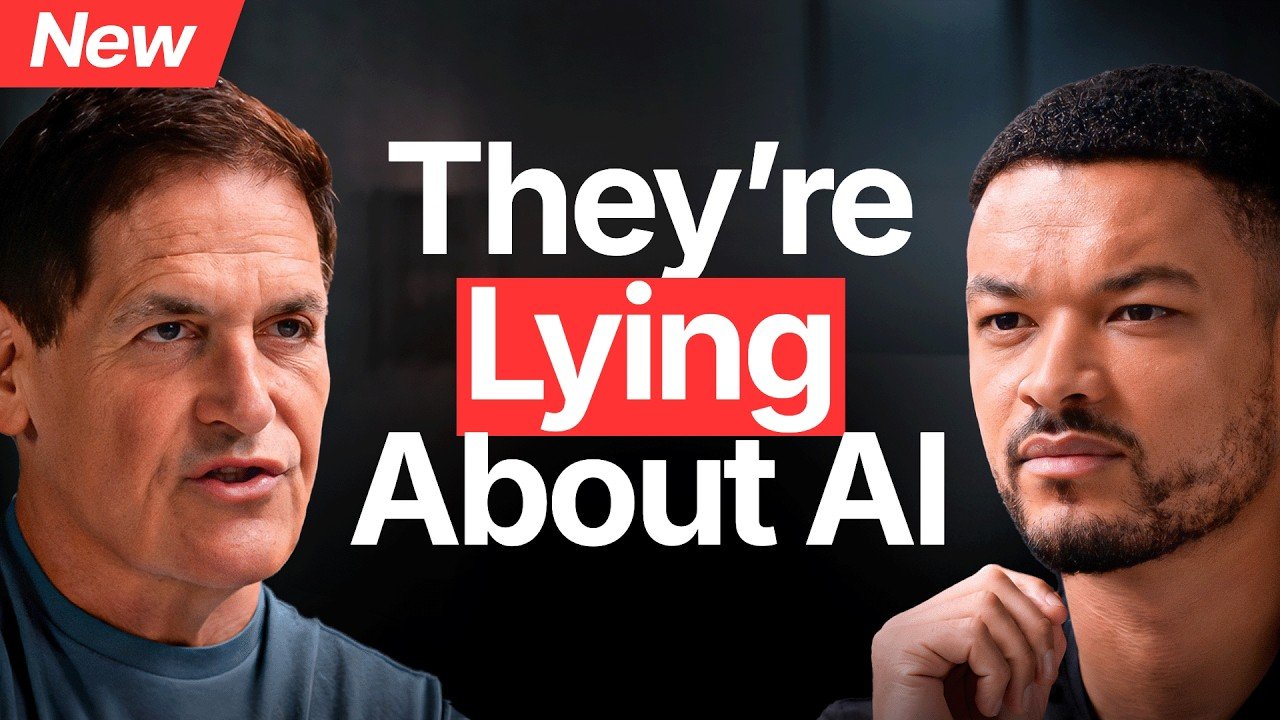
In a wide-ranging conversation with Steven Bartlett, the entrepreneur explains why he embraces AI without buying its biggest promises—and why success increasingly means choosing what not to do.
Mark Cuban is enthusiastic about artificial intelligence. He uses agents to track lawsuits, monitor business opportunities, and tackle research that once would have languished on his to-do list. He tells his children to learn the technology because people who use it well will become dramatically more productive.
But he rejects the idea that greater computing power automatically amounts to greater intelligence—or that technological progress makes human judgment irrelevant.
That tension runs through his conversation with Steven Bartlett: Cuban believes in using powerful tools without surrendering responsibility to them. The same instinct shapes his approach to business, money, leadership, and family. Build the capabilities. Understand the limitations. Then decide what deserves your time.
You have to learn this stuff because if you don’t, the person who does is going to be so much more productive than you are.
— Mark Cuban
AI Makes You More Productive. It Doesn’t Make Your Decisions.
Cuban’s most concrete example of AI’s value comes from his work at Cost Plus Drugs.
He describes using agents to monitor large healthcare companies: when they face lawsuits, he receives alerts; when they bid on contracts, agents flag the activity. He can then use AI to draft public-records requests seeking copies of those contracts.
Previously, that work would have required finding, training, and managing someone to do it. In practice, much of it simply never happened. Agents have made previously impractical work routine.
All the tedious work that you didn’t want to do or always couldn’t get to or thought you had to hire somebody for, now you have an agent that does it.
— Mark Cuban
For Cuban, that distinction matters. Automation does not only replace existing tasks. It also opens up work that people lacked the time or resources to attempt.
Bartlett pushes on the employment implications: if an agent performs something Cuban might otherwise have hired someone to do, isn’t that a lost job?
Cuban acknowledges the substitution but argues that increased productivity can create opportunities elsewhere. A founder who gets more done may discover a new business, pursue a different project, or hire people for higher-level work. He frames this as creative destruction—not a painless transition, but not necessarily the end of employment either.
His argument is optimistic, though it remains a forecast rather than a guarantee. The immediate productivity gains are easier to describe than the future jobs they might generate.
The Edge Is Knowing What to Do With the Answer
When everyone can ask a model for a business plan, access to information becomes less distinctive. Cuban locates the advantage elsewhere: in knowing what to ask, evaluating what comes back, and applying it to a real objective.
He compares using multiple models to consulting several highly knowledgeable people. Their answers may differ. The user still has to weigh the responses and reach a conclusion.
A generated business plan, in other words, is not a functioning business. Someone must identify what is right, reject what is wrong, and turn the proposal into something customers will buy.
I’ve got to be the one to say, ‘This is right, this is wrong, this is right.’
— Mark Cuban
This is where Cuban’s enthusiasm becomes skepticism. His repeated declaration that “AI is not smart” rests on a demanding definition of intelligence: identifying a problem, finding the relevant inputs, and solving it under real-world constraints.
He argues that models’ dependence on computing resources, incomplete access to the physical world, and latency leave meaningful room for human judgment. Bartlett challenges him with the possibility of rapid improvement and increasingly capable autonomous systems.
Cuban does acknowledge a limitation in his own outlook. Having watched earlier generations of computers become faster and more capable, he concedes that his experience may influence—and potentially constrain—how he interprets what comes next.
The useful takeaway is not that the debate is settled. It is that Cuban separates a technology’s practical usefulness from the grander claims made about its destination.
An AI Optimist Who Worries About the Financing
Cuban’s doubts extend beyond model capabilities to the economics supporting the industry.
He worries about the borrowing required to finance AI infrastructure, the competition for capital, and what happens if financing costs rise before the investments produce sufficient returns. His earlier suggestion that some data centers could become pickleball courts, he explains, was a metaphor for infrastructure that might outlive its economic purpose.
His preferred direction is efficiency: less power accomplishing more, rather than ever-larger resource demands.
You have to have less power doing more, not more power doing more.
— Mark Cuban
These are concerns Cuban raises in the interview, not evidence that a particular financial outcome is inevitable. He explicitly says he is not enough of a financial expert to predict exactly what gets squeezed if government borrowing and private infrastructure spending compete for funding.
His own response is caution. He describes investing less aggressively, keeping money in different countries, and waiting to see how conditions develop.
For listeners without a billionaire’s balance sheet, the conversation returns to a more immediate investment: becoming good at something. Skills, knowledge, and the ability to work with people remain the capabilities Cuban and Bartlett believe individuals can actively build.
Money Bought Freedom. Fame Brought a Different Bill.
Cuban’s account of wealth is less about luxury than autonomy.
After selling MicroSolutions, he says, he bought a lifetime American Airlines pass and set out to enjoy himself. Taking off his watch became a symbolic declaration: he no longer wanted to live on someone else’s schedule.
The later sale of Broadcast.com expanded that freedom enormously. Buying an NBA team—something he says he had never imagined doing—became possible.
But he draws a sharp distinction between financial security and personal transformation. Money removed pressures around bills and housing. It did not automatically change his character, relationships, or feelings about himself.
Money changed my life, but it didn’t change my life.
— Mark Cuban
Celebrity was a different experience. Cuban describes the attention surrounding the Mavericks and Shark Tank as harder to navigate than wealth itself.
That attention also reached people who had not chosen it. His brothers faced comparisons and assumptions about their relationship to his success. His children grew up knowing that a mistake that might remain private for a friend could become a public story for them.
The freedom money created for Cuban did not eliminate the burdens visibility placed on his family.
Being Nice Was a Better Business Strategy
Cuban does not present his younger self as a model leader.
At MicroSolutions, he says, he yelled and screamed. Later, his Broadcast.com partner Todd Wagner told him that people were afraid of him—and that it was counterproductive.
Cuban’s conclusion is straightforward: being easier to work with helped him accomplish more and made him happier doing it.
I found that I got a lot further by being nice than by being a dick.
— Mark Cuban
Bartlett raises the familiar counterargument: doesn’t kindness invite people to take advantage?
Cuban does not equate being pleasant with abandoning boundaries. He can decline to write a check, reject a proposal, or make a difficult decision without turning the interaction into a confrontation.
His position challenges a persistent business mythology—that anger is proof of seriousness and ruthlessness is a prerequisite for success. For him, unnecessary hostility became a cost rather than an advantage.
Know Your Weaknesses—and Find Your Complement
Cuban is equally candid about what he does poorly.
He describes himself as action-oriented rather than detail-oriented: someone inclined to move first and adjust later. Across his businesses, he has relied on partners whose strengths compensate for that tendency.
He also separates leadership from hiring. He believes he is good at the former and bad at the latter.
The problem, he says, is his salesperson’s optimism. Faced with a candidate, he can convince himself that he will help the person succeed—even when the fit is wrong. Recognizing that weakness means not insisting on personally owning every hiring decision.
It wasn’t that I needed a partner, it’s that I needed a partner.
— Mark Cuban
The distinction is between wanting company and needing complementary ability. His account of entrepreneurship is not a story about mastering everything. It is about understanding which shortcomings other people must help cover.
He also rejects the idea that everyone should become a founder. Entrepreneurship, in his telling, often delivers the opposite of the freedom people expect. Customers, employees, and unexpected problems make demands that cannot simply be switched off.
Culture Is What You Give People the Tools to Do
Cuban’s Mavericks stories turn an abstract idea—building a winning culture—into a series of operational choices.
When he arrived, he says, the organization felt like a temporary stop rather than a destination. He wanted to change both expectations and the conditions under which people worked.
One example was player development. He questioned why a team paying athletes substantial salaries devoted comparatively limited resources to improving their skills. His response was to bring in former players to work individually with current players who had similar skill sets.
He also invested in travel, nutrition, and other support. Those decisions had two purposes: improve performance and demonstrate that the organization took winning seriously.
The message was not merely “work harder.” It was that the organization would supply the resources needed to meet its expectations.
We’re going to win. We’re going to support each other and I’m going to get you all the tools you need.
— Mark Cuban
Innovation mattered too. Cuban recounts hiring his former statistics professor Wayne Winston to apply analytics to basketball.
But he does not frame data as a replacement for observation. His position is that numbers and the eye test belong together. A player’s contribution to winning may be more substantial than an impressive scoring total—or less obvious than a polished shooting motion.
For business leaders, the parallel is clear: measure outcomes, examine assumptions, and avoid confusing visible individual talent with collective effectiveness.
The Family Cost of Success
The conversation’s emotional center arrives when Bartlett reads a letter from Cuban’s brother Brian.
In it, Brian recalls a crisis in July 2005 and credits Mark and their brother Jeff with helping him survive. Cuban describes returning from out of town after Jeff called, getting Brian help, and his brother’s subsequent sobriety.
The exchange gives weight to a family principle their father emphasized: wherever life takes you, stay in contact with your brothers.
It also reframes the discussion of success. The important action in that story is not making a deal or winning a championship. It is coming home when someone needs you.
Later, Cuban connects the deaths of his parents with a stronger awareness of his own mortality. That awareness changed how he evaluated commitments. Another business trip began to look less important. Missing a birthday became harder to excuse with the promise that he would attend the next one.
He identifies family time as a major reason behind leaving Shark Tank and selling majority ownership of the Mavericks.
“They’re Too Young to Remember” Wasn’t the Whole Story
Cuban does not pretend he always balanced work and family well.
He recalls justifying missed events by telling himself his children were too young to remember. Looking back, he wishes he had attended more of those smaller moments.
Asked whether the regret comes from his children or from himself, he answers: both.
That admission complicates the familiar story of building wealth to gain control of one’s time. Financial independence can create options, but it does not automatically make a person choose presence. The competitive instinct can keep demanding another trip, another project, another win.
For Cuban, the question eventually became not whether he could keep doing those things, but why he should.
My favorite word in the world is dad.
— Mark Cuban
He becomes emotional describing what he hopes his children will remember after he is gone. He wants them to be proud of him, to remember him positively, and to carry forward what they have shared.
It is the interview’s clearest expression of how his definition of success has changed.
Cost Plus Drugs Gives Competition a New Purpose
Cuban has not lost his appetite for a fight. He has redirected it.
Asked what he wants from the next phase of his career, he names Cost Plus Drugs and his ambition to change American healthcare.
He describes a different kind of reward from the applause that accompanies a basketball win: someone approaching him to say they can now afford their medication.
His strategy, as he explains it, includes pressing employers to reconsider how they purchase healthcare and challenging the large companies he believes dominate the system. He also says he is willing to work across political differences when doing so advances affordability and health.
The ambition remains characteristically large. What has shifted is the outcome he wants to produce.
Across the conversation, autonomy emerges as the connecting idea: the freedom to control his time, the judgment to use technology without deferring to it, and the ability to choose which problems are worth pursuing. In Cuban’s current chapter, that freedom matters most when it creates room for family—or helps someone else live with fewer constraints.
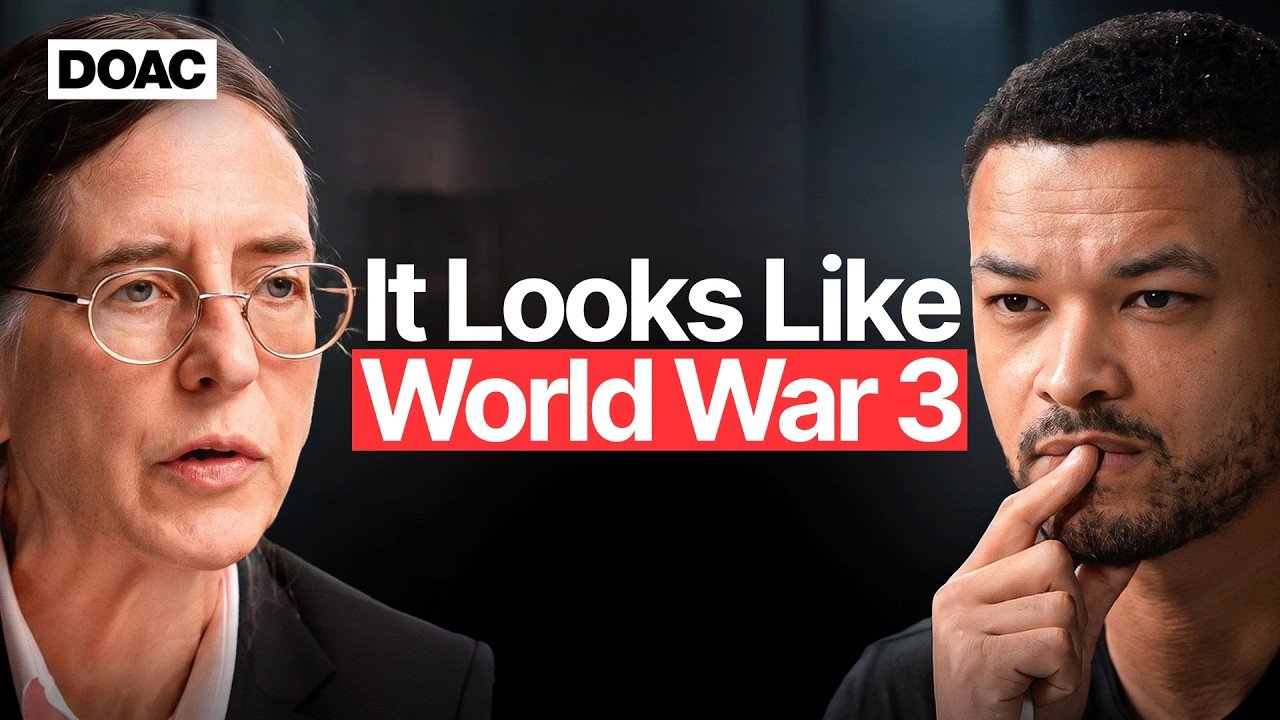
This recap is based on Mark Cuban’s appearance on the Diary of a CEO podcast. For the full episode, click on the YouTube link at the top or listen wherever you get your podcasts.