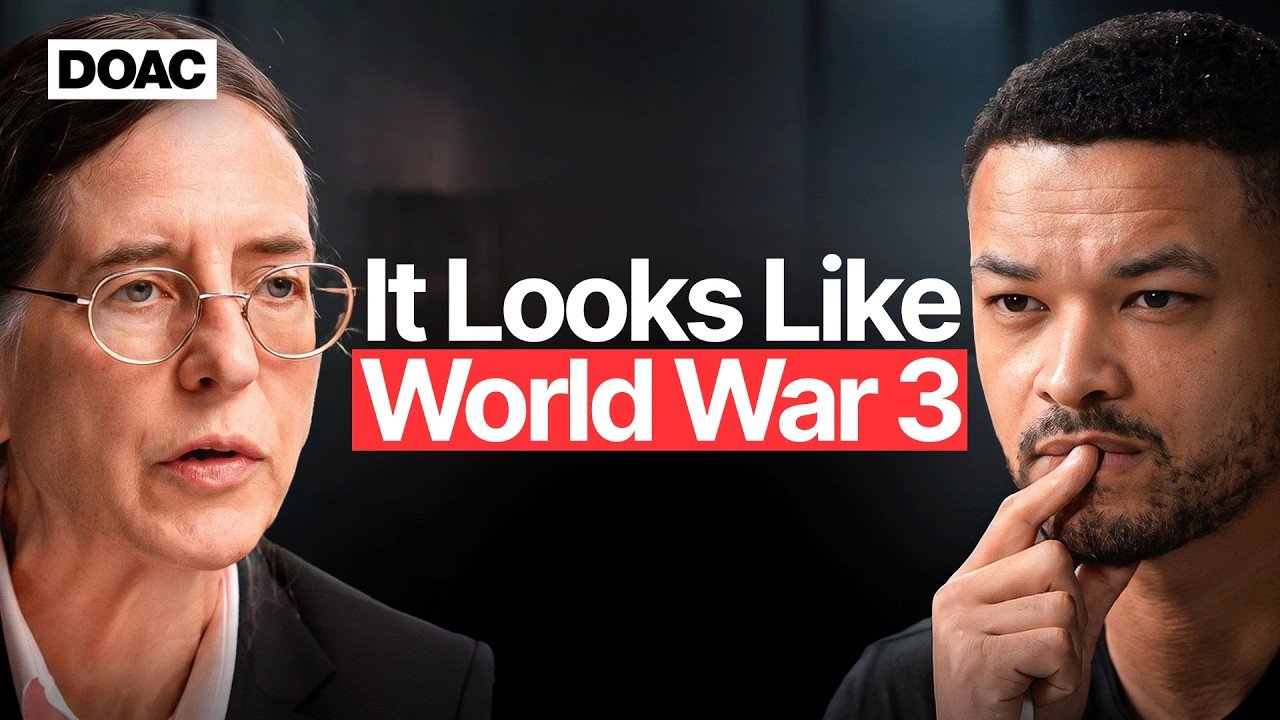

Sarah Paine Warns the World Is Forgetting Why Wars Are So Hard to Stop


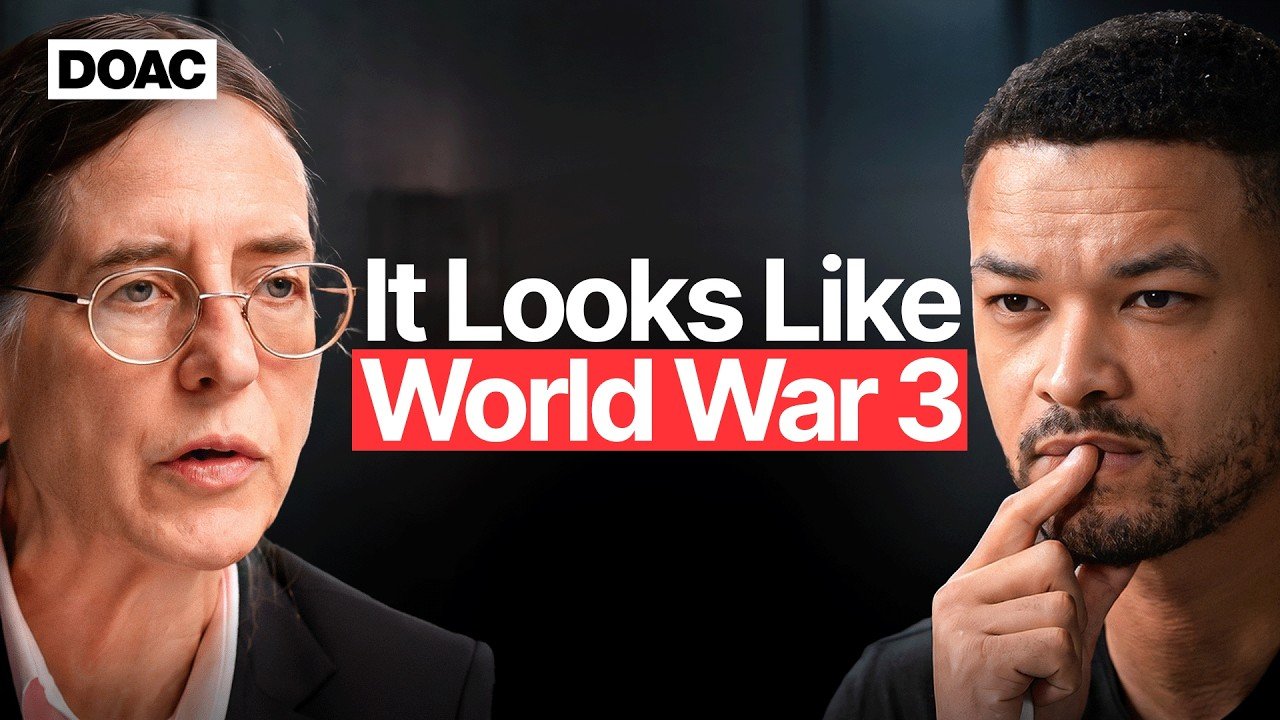
Historian Dr. Sarah Paine has a warning for people who grew up believing a world war belonged to the past: peace is not self-sustaining, and starting a conflict is much easier than finding a way out.
In a wide-ranging podcast conversation, Paine connects Russia’s invasion of Ukraine, the Trump administration’s approach to Iran, and mounting distrust between international partners to a broader argument. In her view, leaders who prioritize territorial control and short-term demonstrations of strength risk destroying the institutions that make countries secure and prosperous.
Her central concern is not simply that more wars could begin. It is that leaders can make decisions that leave themselves—and everyone else—with progressively worse options.
Once wars start, easy to do that part. Really hard to end them.
Two Competing Ideas of Power
Paine frames the discussion around two ways of organizing the world.
The first is what she calls a continentalist approach: power comes from acquiring territory, controlling neighbors, and dividing the world into spheres of influence.
The alternative is a maritime order, built around commerce, industry, trade, and shared rules. In Paine’s account, its advantage is that countries can become wealthier without taking someone else’s land.
She illustrates the distinction through everyday transactions. A payment card working abroad, or a small business operating across national borders, depends on arrangements that people rarely notice until they stop functioning.
For Paine, that is why international rules are not merely diplomatic abstractions. They help make ordinary economic life possible.
The best strategies, the ones that really work are win-win. So that you get something out of it, I get something out of it.
Her criticism of territorial expansion follows from this distinction: conquering and destroying places can undermine the wealth a country claims to be pursuing.
The Government Successes Nobody Notices
When the conversation turns to whether warnings about world war are exaggerated, Paine introduces a distinction between positive and negative objectives.
A positive objective means making something happen. A negative objective means preventing something from happening—and successful prevention is difficult to prove.
Her example is a parent holding a child’s hand near traffic. Nobody can count precisely how many accidents that prevented. The absence of an accident does not make the precaution pointless.
She argues that governments perform similar work through infrastructure inspections, professional licensing, education, and national defense.
Governments don’t actually get credit for what they do because on a normal day it’s normal.
The same problem applies to deterrence. A war that never happens leaves no obvious evidence of the disaster avoided. Paine’s point is that people should not confuse an uneventful outcome with an unnecessary effort.
A “Pivotal Error” Changes the Choices Available
One of the episode’s most useful concepts is Paine’s definition of a pivotal error: a decision that permanently replaces better options with worse ones.
Once you’ve made it, the choices that you had before, they’re a lot better than ones you have now. And you never get the old ones back.
She applies that framework to Vladimir Putin’s full-scale invasion of Ukraine. In her assessment, the invasion strengthened Ukrainian national identity while imposing enormous costs on Russia.
She also applies it to the Trump administration’s war in Iran, arguing that military action can damage alliances, spread economic costs beyond the battlefield, and create new incentives for countries to seek nuclear weapons.
These are Paine’s assessments, not settled predictions about how either conflict will end. Their common thread is the importance of judging a decision by the options it destroys—not just the immediate result it promises.
Why Overwhelming Force Does Not Guarantee Victory
Paine repeatedly challenges the idea that military superiority automatically produces political success.
She calls one version of this mistake “half-court tennis”: studying your own side while failing to understand the opponent.
A serious assessment, she argues, must examine not only your strengths and the other side’s weaknesses, but also their strengths, your vulnerabilities, and the interests of everyone else who might become involved.
That connects to another distinction: some situations can be solved; others must be managed.
Paine presents containment of the Soviet Union as an example of managing a dangerous adversary without attempting to eliminate it through direct war. Her argument is that an imperfect, sustainable arrangement may be preferable to pursuing an outcome that cannot realistically be achieved.
There are certain things that as desirable as they are are just not attainable.
The warning extends beyond foreign policy: ambition becomes dangerous when leaders refuse to distinguish an attractive goal from a feasible one.
“Death Ground”: When Surrender Is Not a Real Option
Paine uses the term “death ground” to explain why an apparently weaker opponent may fight with extraordinary determination.
If people believe defeat means death or the destruction of their community, she argues, refusing to fight no longer looks like the safer choice.
If you have these unlimited objectives, expect one hell of a fight.
This is central to her interpretation of Ukraine’s resistance. She argues that treating the war as a dispute that outsiders can resolve simply by accepting territorial concessions overlooks what Ukrainians believe they stand to lose.
It also helps explain her criticism of regime-change ambitions. Threatening an opponent’s survival can make compromise harder rather than force a quick surrender.
Winning Battles Is Not the Same as Having a Strategy
Later in the conversation, Paine separates warfare into three levels:
- Tactical: what individual weapons and units can do.
- Operational: how battles and campaigns are organized.
- Strategic: why the war is being fought and whether it serves the country’s larger interests.
The strategic question is the one she believes deserves more attention.
Why are you fighting in the first place?
For Paine, political leaders should ultimately protect national security and promote prosperity. Battlefield achievements mean little if the wider campaign undermines both.
She extends the same framework to domestic politics. Winning an election is an operational achievement, she argues, but it should not replace the larger purpose of governing.
The Democratic Advantage Is the Ability to Reassess
Paine’s defense of democracy is not that democratic leaders always make good decisions. It is that elections offer a way to replace leaders and change direction without a violent struggle for power.
Her concern about dictatorships is the opposite: leaders who fear what will happen after they leave office may have powerful personal reasons to keep escalating.
They seem eternal until the day they shatter and then it’s impossible to predict.
She does not present a confident forecast of Russia after Putin. Instead, she describes uncertainty and potential instability, arguing that democratic governments should prepare for different possibilities rather than assume an orderly transition.
For voters, her advice is more immediate: remain willing to reconsider a political choice when new evidence emerges.
Changing your mind, in her account, is a necessary part of learning—not a failure of loyalty.
A Warning That Ends With Responsibility
Despite the conversation’s grim outlook, Paine does not end by recommending helplessness.
Asked what younger people should do when war, political division, and other crises feel overwhelming, she urges them to keep reading, keep learning, speak across political divides, treat others politely, and vote.
Talk across these silos that divide us.
Her closing answer brings the discussion back from geopolitics to its human consequences. Asked what makes her emotional, she points to suffering, particularly the suffering of children.
The institutions, alliances, and political choices discussed throughout the episode ultimately matter, she argues, because of the lives they leave behind.
What is more important than the generations that follow? Nothing.
This recap is based on William S. Sims University Professor Emerita of History and Grand Strategy Professor Sarah Paine’s appearance on the Diary of a CEO podcast. For the full episode, click on the YouTube link at the top or listen wherever you get your podcasts.