Break the Habit of Being Yourself: Dr Joe Dispenza’s 7‑Day Change Formula


Dr Joe Dispenza wants you to consider a simple but unsettling proposition: most of what you think, feel, and do by your mid-30s is running on autopilot—and that autopilot may be keeping you sick, stuck, or both.
For readers who follow the intersection of neuroscience, behavior change, and wellness, Dr. Dispenza is a familiar figure: a researcher and best-selling author whose work blends brain imaging, epigenetics, and meditation practice into a single promise—that you can “break the habit of being yourself” and, in doing so, change your biology.
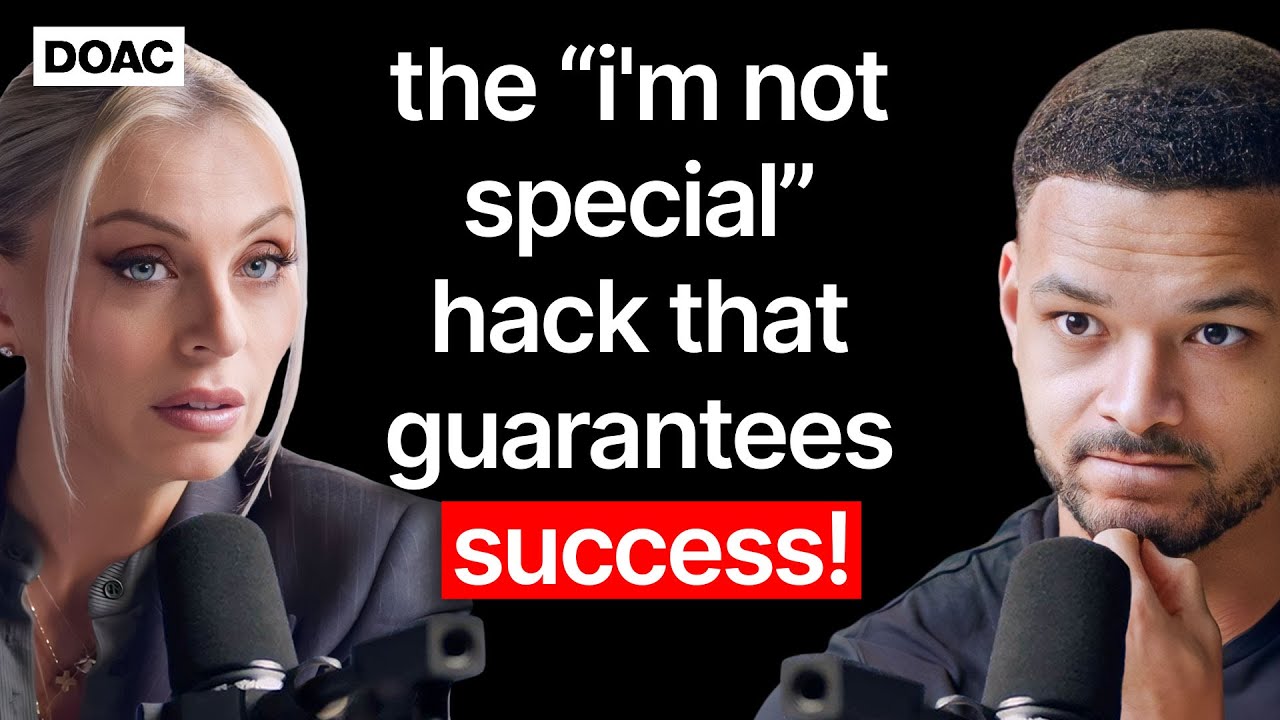
Dr. Dispenza sits down with Steve Bartlett on the Diary of a CEO podcast to unpack how habitual thoughts and emotions keep us running on autopilot—and whether changing those patterns can measurably shift our biology, behavior, and even health outcomes.
The core claim: your thoughts shape your biology
Our research shows that your thoughts can make you sick—and the question is: if your thoughts could make you sick, can your thoughts make you well? That’s absolutely possible and it’s easy to learn.
Dispenza frames stress as the engine of disease: 75–90% of visits to healthcare facilities are driven by psychological or emotional stress. He argues that many people become “addicted” to familiar negative emotions—anger, resentment, guilt—and use life problems to reaffirm those states.
People are reliving a miserable life they never even had—just to excuse themselves from changing.
95% of who we are is programmed by 35
95% of who we are by the age of 35 is programmed… but there is a way to change.
He defines a habit as a redundant set of automatic, unconscious thoughts, behaviors, and emotions acquired through repetition. When the body knows how to do something better than the conscious mind, it’s running subconsciously.
The greatest habit we have to break is the habit of being ourselves.
Change, in his model, means becoming so conscious of those unconscious patterns that you no longer slip back into them unnoticed.
You’re only unconscious when you’re in the program. To change is to become so conscious that you don’t go unconscious again.
Trauma, transformation, and the limits of change
When asked whether early-life trauma creates unchangeable patterns, Dispenza says his view has expanded as he’s witnessed extreme recoveries.
I would never put a limitation on change… I just don’t think you can really predict that.
He lists conditions where he’s seen dramatic shifts: stage-four cancers, ALS, lupus, MS, Parkinson’s, spinal cord injuries, strokes, PTSD, cystic fibrosis, muscular dystrophy—and even a woman who grew a new thyroid after surgical removal.
I don’t know any longer what the limit is.
A standout story: an NFL player with MS who arrived thinking he was at a yoga retreat, then had a profound mid-week experience.
He said, ‘I just never loved myself.’… He somehow upregulated genes in different ways, suppressed the genes for MS, and by the end of the event he was walking.
After he stood up, others in the room began having similar experiences—what Dispenza calls a “four-minute mile” effect for consciousness.
The change formula: information → rehearsal → experience → emotion → embodiment
Dispenza outlines a repeatable process:
- New information (science-based) creates new synaptic connections.
- Rehearsal and teaching wire those connections (“nerve cells that fire together wire together”).
- Experience enriches the circuitry.
- Emotion chemically instructs the body what the mind has understood.
- Repetition conditions mind and body to work as one.“The moment you feel unlimited, grateful, empowered, whole—now you’re teaching your body chemically to understand what your mind has intellectually understood.”
Mental rehearsal, he says, can physically change the brain. In piano studies, people who only mentally rehearsed scales grew the same neural circuits as those who physically practiced.
They were so present… the brain did not know the difference between the real-life experience and what they were imagining.
Applied to behavior change:
Rehearse it in your mind until it feels right… go from start to finish without losing your attention.
Why we can’t apply what we know (and how to fix it)
Many people “know” what to do but can’t act consistently. Dispenza says crisis often forces change, but a better path is to be defined by a vision of the future.
You can’t wait for your wealth to feel success. You can’t wait for your new relationship to feel love.
Instead, combine a clear intention with an elevated emotion—gratitude, love, freedom—before the outcome appears.
If you can get your behaviors to match your intentions, your actions equal to your thoughts, your mind and body working together—you’re going to have a new experience.
The hardest part?
The hardest part about change is not making the same choice as you did the day before.
Addiction to negative emotions (including guilt)
When the host admits to late-night sugar binges and messy hotel rooms, Dispenza offers a sharp reframe:
You could actually be addicted to the guilt—not to the sugar.
People use external behaviors to regulate internal states. Change the emotional state, and the compulsion loses power.
When you overcome the emotion, the memory without the emotion is called wisdom… you’re free from the past.
Biological change in 7 days
Dispenza’s week-long events track fMRI/qEEG brain scans, 2,882 blood metabolites, gene expression, and microbiome shifts.
In seven days… there are dramatic changes in the way their brain works… their body literally is living in a new environment.
He claims 75–85% causality in responses without drugs:
Their nervous system is producing a pharmacy of chemicals that works better than any drug.
Helping loved ones: don’t lecture—shift their state
When asked how to help friends stuck in self-destructive patterns, he advises against analysis and advice.
No new information can enter the nervous system that’s not equal to the person’s emotional state.
Instead:
Help them out of their emotional state… not a lecture. Come on, let’s go do something… break themselves out of that state.
Model joy and love; show what change looks like.
Show them what love looks like. Show them what joy looks like. I think people notice that. It gives them permission to do the same.
Survival mode, stress, and the “cultural disease”
Dispenza describes modern life as chronic survival: fight-or-flight becomes the baseline.
Stress is when your brain and body are knocked out of homeostasis… and that imbalance becomes the new balance.
Emotions like anger, fear, anxiety, shame, and depression are “altered states of consciousness” driven by stress hormones.
You can turn on the stress response just by thought alone… you can become addicted to your own thoughts.
On the world’s trajectory:
A lack of connection… If you keep people in survival and fear and anger and pain and confusion, and you can control their attention by controlling their emotions… we may not make it as a species.
His remedy: collective coherence.
It’s not the number of people. It’s the most coherent in heart and brain that begin to produce effects.
Manifesting: why mirror talk often fails
He distinguishes shallow affirmation from high-amplitude decision.
The majority of people who change belief made a decision with such firm intention that the amplitude of that decision carried more energy than the hardwired programs in their brain and the emotional conditioning in their body.
Without that energetic shift, the “precognitive body” dismisses the intention:
Your body is so precognitive… it already knows when you’re going to stand up… If you say, ‘I’m going to change tomorrow’—your body says: ‘Relax, he’s lying again.’
Belief change requires repeated state shifts:
They were doing their meditations to change—not to heal. They were doing it sometimes three times a day because they stopped believing… ‘Let me sit down and change my state of being again.’
Relapse: you went unconscious
On why good habits collapse:
You went unconscious… some interaction in your outer world causes you to feel a certain way and you return back to the past. The emotion is the past.
The fix is to catch the slide early and re-induce the state.
If today were your last day: the central message
It’s important for people to believe in themselves… to remember that they’re the creators… and that possibility is something they should always keep their mind open to.
We’re greater than we think. We’re more powerful than we know. More unlimited than we could ever dream.
What he wants in the next 10 years
- Publish more papers demonstrating human capacity for self-directed healing.
- Build a dedicated research center (cancer, chronic disease, healing-at-a-distance).
- Shift healthcare conversations toward emotional regulation and meditation as mainstream tools.
Meditation could be a way of life for more people—to be healthier, happier, and more whole.
He’s skeptical about AI as the next “sexy” thing:
I hope it’s not AI. I hope it’s something that has to do with the human spirit.
Walk for the World: a global walking meditation
Dispenza is organizing a synchronized global walk (first held Sept 23, 2023) to demonstrate collective coherence.
It’s not enough to just pray. It’s time to be the prayer.
Participants alternate seated/standing meditation with eyes-closed and eyes-open walking, embodying peace and intention in public.
If we change—and enough of us change—we could actually change the world.
He cites data where coherent groups shift random event generators away from 50/50, suggesting “collective networks of observers” influence reality.
Beliefs he’s “too scared to share”
I have a very strong belief that the probability of us seeing the truth of reality is zero. We perceive less than 1% of reality.
He posits realities beyond space-time and latent brain systems that can transduce non-local information—comparing the pineal gland to a radio receiver with micro-crystals.
Psychedelics give a person a perception of reality beyond three-dimensional reality… and we’re discovering the nervous system makes its own pharmacy of psychedelics endogenously.
If he were president: what he’d change
- Elevate and reward teaching; move education toward Socratic questioning and debate.
- Re-examine the medical model and whether healthcare truly improves health.
- Unify factions; stand for principles over politics.
- Reduce debt, end wars, rethink AI’s role in human flourishing.
- Encourage interfaith cooperation.
- Invest in regenerative agriculture, ocean health, and food as medicine.
This recap is based on Dr Joe Dispenza’s appearance on the Diary of a CEO podcast. For the full episode, click on the YouTube link at the top or listen wherever you get your podcasts.