Olivia Munn on Survival, Self-Defense and Starting Over


On Armchair Expert, the actor and activist discusses childhood abuse, anxiety, breast cancer, motherhood, relationships, and why she now wants “an easy happy life.”
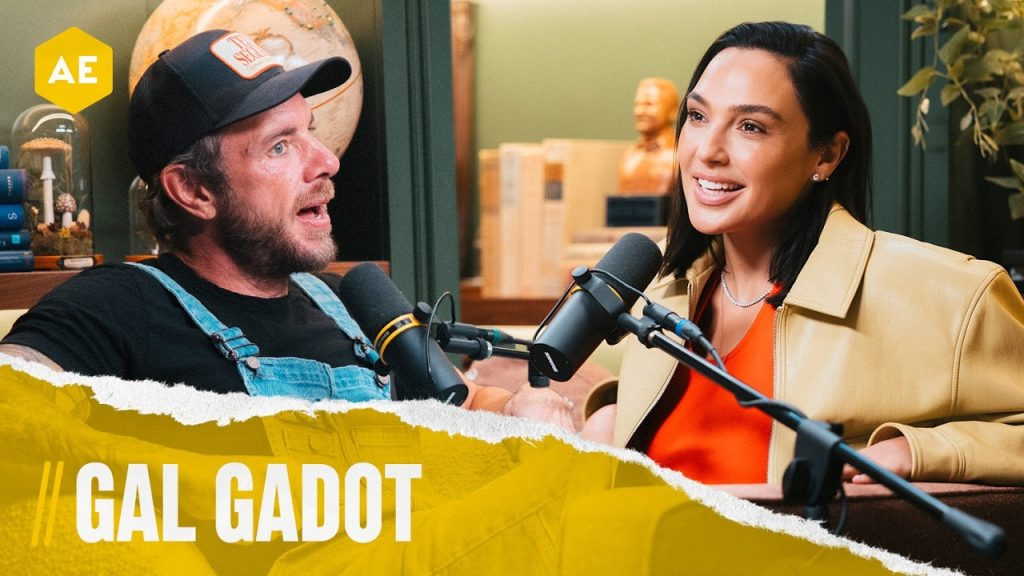
Olivia Munn opened up about survival, trauma, motherhood, breast cancer and the cost of constantly fighting during an unusually personal appearance on Armchair Expert.
Speaking with Dax Shepard and Monica Padman, Munn reflected on the experiences that shaped her instincts: growing up in a strict and abusive household, defending herself at school, advocating for colleagues, choosing roles based on personal convictions, and confronting a cancer diagnosis that arrived despite reassuring early tests.
The conversation also explored Munn’s Apple TV+ series Your Friends & Neighbors, a drama about wealth, status and the fear of losing access to an elite world. Throughout the interview, Munn and Shepard repeatedly returned to the same question: what happens when the strategies that once protected you begin to control your adult life?
Living with sensory sensitivities
The interview began with a discussion of sensory sensitivity. Munn described bright lights, fluorescent lighting and certain sounds as especially difficult, recalling how she struggled with them from a young age.
She also explained that she finds comfort in repetition. She can listen to the same song repeatedly during a long drive and regularly watches films more than once. Padman connected this habit to anxiety, while Munn acknowledged that she has dealt with significant anxiety throughout her life.
Munn also discussed trichotillomania, a compulsive hair-pulling condition. She said that pulling out an eyelash can create a brief sensation of relief, followed almost immediately by regret.
There’s a quick second of pain. And then there’s a satisfaction—and then immediate regret.
The conversation broadened into a discussion of obsessive-compulsive disorder, procrastination and hoarding. Munn said that learning more about OCD helped her understand that some compulsions involve actions that conflict with a person’s values, rather than simply being neat or organized.
A childhood shaped by fear
Munn’s family history took the conversation from lighthearted stories into much darker territory.
Her mother left Saigon for the United States in 1975 with Munn’s grandmother and eight other children. Munn described her mother’s family as ethnically Chinese but culturally connected to Vietnam, and recalled how her uncles embraced an idealized image of America shaped by films, television and bodybuilding culture.
She also spoke about her first stepfather, whom she described as abusive. The family moved from Oklahoma to Utah, where Munn said she felt separated from the grandparents who had helped make her feel safe.
Munn recalled one Christmas when her stepfather beat her brother after he challenged his claim that he had made a sled. She also described a confrontation at age 15, when the stepfather slapped her hard enough to cut her eye after she stopped speaking to him.
That solidified for me that there’s a lot of power in fighting back.
Munn said that her instinct to fight back later became both a strength and a liability. It helped her advocate for others, but it also made her prone to treating smaller conflicts as major threats.
Mine was a consistent nine.
She used that description to explain her baseline anxiety as a child: situations that might have registered as a one or two for someone else could feel like a nine to her.
The instinct to defend others
Munn described herself as deeply motivated by justice. She said she often intervened when she believed another person was being treated unfairly, even when the situation was not directly hers to resolve.
Over time, she realized that some people were relying on her willingness to fight. They could raise a complaint, allow her to confront the person in charge and avoid taking responsibility themselves.
She connected this pattern to her childhood. Munn said she often felt powerful when defending other people, but struggled to advocate for herself because abuse had left her with an underlying sense of worthlessness.
I felt really powerful for other people.
Her school years provided another example. After moving back to Oklahoma, Munn said she was targeted by girls who resented the attention she received from boys. The bullying became so intense that she eventually put down her lunch, stood up and challenged them to fight.
She recalled taking a karate stance as the group backed away. The following year, after she became a varsity cheerleader and homecoming princess, some of the girls wrote to apologize.
That experience reinforced the idea that confrontation worked. Munn acknowledged the danger of allowing bravery to become central to one’s identity.
My identity is kind of dependent on me proving my bravery a lot.
From cheerleading to acting
Munn described cheerleading as an important way to find belonging. After struggling socially in Japan, she borrowed a library book to teach herself the fundamentals and tried out for her school’s team.
She made varsity as a ninth-grader, competed across the Far East and eventually helped her team win a major competition. The victory was so contentious that the coach reportedly kept the team indoors afterward because the rival squad was looking for them.
The story illustrated how Munn repeatedly turned unfamiliar environments into challenges she could master. That same determination followed her into entertainment.
She discussed moving from hosting and reality television into acting, including her work on The Newsroom. Munn said she clashed with a director who repeatedly tried to push her character toward a more flirtatious performance, even when she believed the character’s actions did not fit the scene.
In one exchange, the director told her he wanted to see “all the different colors of the rainbow.” Munn responded that the forceful quality he was criticizing was precisely what she intended.
He said, ‘I don’t think you realize how you’re coming off.’ And I said, ‘How am I coming off?’ And he said, ‘Really forceful and strong.’ And I said, ‘Great. That’s what I wanted.’
Munn later learned that the director had described her as late and combative to another production. She disputed the claim and said the episode changed how she viewed her career.
I truly just want to do great work that I’m happy with. And I want to live an easy, happy life.
She also explained why she turned down the role of Ryan Reynolds’ wife in Deadpool. At that point, Munn felt many of the roles offered to her existed only in relation to a male character.
I was like, ‘There’s a story, you know.’
Although Deadpool became a major success, Munn said she did not regret choosing according to her values at that stage of her life.
A cancer diagnosis despite negative tests
One of the most serious sections of the interview focused on Munn’s breast-cancer diagnosis.
She explained that she had received a negative mammogram, a negative ultrasound and tested negative for the BRCA gene. Her doctor nevertheless encouraged her to take an online breast-cancer lifetime-risk assessment.
Munn’s score was 37.3 percent. A result above 20 percent is generally considered high risk, according to the discussion. Her doctor recommended an MRI, which revealed an abnormality in her right breast. Further testing identified additional tumors.
An MRI biopsy later confirmed that Munn had bilateral, multifocal and multiquadrant breast cancer.
I was so scared for me because I realized how lucky you are, but you’re still so scared.
Munn said the cancer had not produced symptoms she could detect herself, which made the diagnosis especially frightening. She had already become a mother, and said having children changed how she valued her own life.
I’ve not valued my life at all until I had kids.
Following a double mastectomy, doctors found a tangerine-sized section of additional cancer while checking the margins. Munn said she did not need chemotherapy or radiation because the cancer had not spread to her lymph nodes and because she chose an aggressive surgical approach.
She described undergoing multiple procedures, including lymph-node dissection, nipple-delay surgery, mastectomy and reconstruction. She also underwent an oophorectomy and hysterectomy, which caused immediate surgical menopause.
The treatment and medication brought exhaustion, rashes, hives, hot flashes and mood changes. Munn said that one medication caused intense anxiety, while another left her exhausted.
Postpartum anxiety and the pressure to be strong
Munn also spoke candidly about postpartum mental-health struggles. After the birth of her daughter, she said she experienced severe anxiety, waking at 4 a.m. gasping for air and feeling chest tightness throughout the day.
She connected the episode partly to stopping breastfeeding. Because she had already struggled to produce enough milk, she felt pressure and guilt before deciding to switch fully to formula.
Every mother should do whatever they need to do to feed their babies and not feel any guilt.
Munn said she had been reluctant to tell her partner, John Mulaney, how much pain she was experiencing. She described holding in her emotions because she had learned that appearing vulnerable could allow people to take advantage of her.
Eventually, she broke down and told him she felt angry all the time. Even moments of happiness were shadowed by the expectation that something terrible was about to happen.
Even when I was happy, I felt like I had my hand on a door and there was a monster trying to get in at any moment.
She also reflected on the difficulty of speaking publicly about private struggles. Once someone has shared a personal story, she said, it can become difficult to ask for privacy or control how others respond.
The illusion of novelty
Munn and Shepard connected over a past conversation about addiction and repetition. Shepard recalled explaining that repeatedly pursuing new romantic partners had not created genuinely new experiences; it had simply recreated the same experience with different people.
It’s the illusion of novelty.
Munn said the idea stayed with her because she had never tried some of the ordinary experiences that come with stability: staying in a long-term relationship, walking through a park with her daughter or building a different kind of life.
Shepard applied the same idea to drinking, recalling how he could go to a bar seeking something new only to find himself staring at the same beer label he had seen countless times.
The discussion led into a broader reflection on trauma and self-sabotage. Shepard suggested that his relapse may have followed a period of financial security because happiness felt unsafe and he unconsciously created the crisis he had been expecting.
Munn recognized the pattern, describing it as a desire to make the feared event happen immediately rather than remain anxious about when it might arrive.
Wealth, status and Your Friends & Neighbors
Munn praised Your Friends & Neighbors, the Apple TV+ series in which she stars alongside Jon Hamm and Amanda Peet.
The show examines the world of extreme wealth and the fear of losing one’s place within it. Munn said her character is different from many of the other figures because she did not grow up wealthy. She knows how to live without privilege, but has become accustomed to the world she entered.
The series explores the elite treadmill: the right school, the right university, the right job, the second home, the expensive car and the constant effort required to preserve appearances.
“There’s this fragility of appearance that people aren’t acknowledging when they have everything—and how quickly it can slip away.”
Munn said the show is interested in how far people will go to regain a life they know may not actually make them happy.
Shepard was particularly interested in the show’s treatment of divorce. Jon Hamm’s character repeatedly reduces the end of his marriage to the fact that his wife cheated, using the affair as a complete moral case against her.
Munn and Shepard questioned whether infidelity is always the central issue in a broken relationship. They discussed the needs, loneliness and communication failures that may have existed long before the affair.
One of the show’s most revealing lines comes when Hamm’s character asks his ex-wife whether she is okay. She responds that he never asked her that during their entire marriage.
You never asked me if I was okay one time.
For Munn, that moment exposes the emotional neglect beneath the more obvious betrayal.
The conversation also turned to the difficulty of leaving an unhappy relationship. Munn compared staying in an uncomfortable situation to slouching: the unhealthy posture feels easier in the short term because the muscles needed to stand straight have not been strengthened.
To do the more uncomfortable thing is the right thing to do.
News, algorithms and family memories
The interview’s fact-check segment moved between politics, online news consumption, entertainment trivia and family life.
Munn criticized the way social-media algorithms can overwhelm audiences with spectacle while obscuring larger events. She said she had been closely following developments involving Iran and Israel, while noticing that many friends were more engaged with highly localized stories or whatever the algorithm placed in front of them.
Shepard argued that political performance and constant controversy can make it harder for people to identify what deserves sustained attention. Munn agreed that the volume of noise can leave people confused and exhausted.
The discussion then became more personal. Munn said she had recently realized that her mother’s heavy YouTube use was partly connected to retirement and having more time. She also recognized that her own memories of childhood had become overly focused on dramatic events.
She remembered watching television with her mother in bed while her mother scratched her arm for long periods. The memory challenged Munn’s belief that there had been no affection in their relationship.
We can’t trust anything we think.
Shepard made a similar observation about the stories people tell about their parents. Dramatic memories may dominate a memoir or conversation, even when most of a relationship consisted of ordinary love and care.
Munn agreed that her parents’ lives could be unfairly reduced to their worst moments.
The vast bulk of all of it, it was just unadulterated love.
The episode’s major takeaways
Munn’s appearance moved across difficult subjects without reducing them to a single redemption story. Her toughness was presented as both a survival skill and something she has had to reconsider.
The interview’s central themes included:
- Fighting back can protect a child, but the instinct may remain long after the danger has passed.
- Anxiety often comes from anticipating the future rather than responding to the present.
- A cancer diagnosis can radically simplify priorities: survival becomes the only job.
- Motherhood can intensify the fear of loss while also creating a stronger will to live.
- Relationships often fail through years of unmet needs, not only through one dramatic betrayal.
- Comfort can become a trap when it prevents necessary change.
- Personal memories are incomplete, and families are more complicated than their most dramatic stories.
Munn arrived as an actor promoting Your Friends & Neighbors, but the conversation became a wider examination of how people learn to survive—and how difficult it can be to stop living as though the danger is still present.
This recap is based on Olivia Munn’s appearance on the Armchair Expert with Dax Shepard podcast. For the full episode, click on the YouTube link at the top or listen wherever you get your podcasts.