


Dr Joe Dispenza: Rewire Your Brain, Attract Your Future

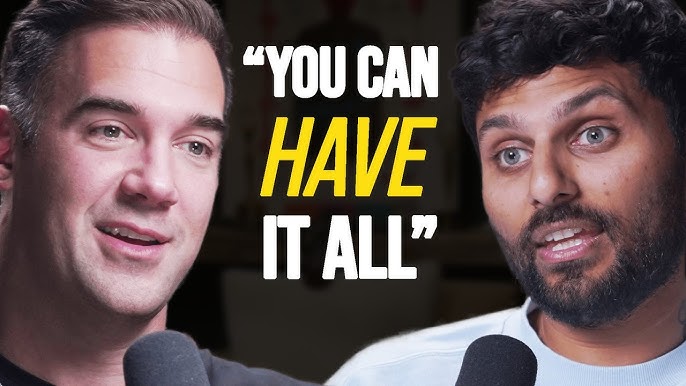
Dr. Joe Dispenza returns to Lewis Howes’ School of Greatness, blending neuroscience, quantum physics, and epigenetics. 95% of us run on subconscious programs — habits, beliefs, emotions — from past trauma.
Dr. Joe Dispenza returns with the same core message that underpins much of his work: if you want a different life, you have to become a different person. Throughout the conversation with Lewis Howes, he argues that healing, abundance, love, and transformation all begin the same way — by changing the patterns that keep us emotionally tied to the past.
Your personality creates your personal reality… Nothing changes until we change.
Dispenza’s case is that most people are waiting for something outside themselves to fix what is really an internal pattern of thought, feeling, and identity. The work, he says, is learning to interrupt the old self long enough for a new one to take shape.
Meet Dr. Joe Dispenza
Dispenza is introduced as an author and teacher working at the intersection of neuroscience, epigenetics, and quantum physics, but the conversation quickly moves beyond credentials and into philosophy. He frames his work around a simple but demanding idea: the brain and body are so conditioned by the past that most people spend their lives recreating the same emotional reality.
Many people are waiting for something in their life to change to take away the lack.
His focus is on self-observation, repetition, and intentional change. If a person can become conscious of the thoughts and emotions that run automatically, he argues, they can begin to build a different future. For Dispenza, the real question is not whether change is possible, but whether people are willing to do the work that change requires.
Why change is hard
Dispenza says most people are not stuck because they lack information. They are stuck because their biology is already programmed to feel familiar patterns, even when those patterns are painful. He describes how people default to the old self because it feels safe, even when it keeps them in frustration, fear, or lack.
The body is programmed to basically behave as if it’s in the past.
That is why he keeps returning to the same point: thinking positively is not enough. A person can want a new life and still keep living as the old personality. The problem is not desire; it is alignment. If the body, emotions, and habits are still organized around the past, the future never really arrives.
Breaking old habits
The episode spends a lot of time on habit formation and the discomfort that comes with change. Dispenza says breaking a habit means confronting the body’s craving for the familiar. The first response to a new pattern is usually resistance, because the nervous system wants to return to what it already knows.
How many times do you have to forget until you stop forgetting and start remembering?
His solution is awareness. He says people have to catch themselves going unconscious, again and again, until they stop repeating the same loop. That is what he calls the moment of change — not perfection, but interruption. The old self loosens its grip when the person keeps noticing the pattern before it takes over.
Becoming conscious
For Dispenza, consciousness is not just awareness in the abstract. It is the act of seeing your own thoughts, emotions, and responses clearly enough to stop identifying with them. Once that happens, he says, a person can begin to separate from the program and observe themselves rather than simply react.
We literally have to become someone else.
That shift matters because it changes the emotional fuel behind behavior. He describes this as becoming conscious of unconscious thoughts, then deciding whether those emotions belong in the future. The point is not to polish the old personality. It is to build a new one.
From lack to abundance
A major thread in the interview is his critique of waiting. Dispenza says many people live in lack because they believe abundance will follow once something in the world changes. They want the money, the relationship, the body, the proof — and only then do they expect to feel whole.
We cannot attract anything in our life that we feel separate from.
He flips that model. In his view, people attract what they are no longer separate from. If someone feels incomplete, they are still reinforcing separation. But if they can feel abundance, gratitude, or love ahead of time, they begin to move toward the experience rather than waiting for it to rescue them.
Intention and emotion
This leads into one of the episode’s central ideas: intention alone is not enough. Dispenza says a clear vision has to be paired with elevated emotion. If the mind knows where it wants to go but the body still feels disconnected from it, the old pattern wins.
All you need is a clear intention and an elevated emotion.
He explains that the emotion of the future is what drives the body toward that future. In his model, people are not supposed to wait for the experience to feel the emotion; they are supposed to practice the feeling first. That is how the future becomes real in the present.
Personality creates reality
Dispenza keeps returning to the idea that personality creates personal reality. He defines personality as how we think, act, and feel, which means changing the result requires changing the operating system underneath it. The issue is not only what someone wants, but who they are while wanting it.
Your personality creates your personal reality.
He uses simple examples to make the point. Someone trying to become healthy or successful cannot keep living like the version of themselves that is passive, unfocused, or out of alignment. The new reality requires a new identity, built deliberately through repeated choice.
Studying the abundant
When asked how people should think about abundance, Dispenza says they should study abundant people. Not to imitate their lifestyle, but to understand their characteristics: persistence, adaptability, resilience, and the willingness to keep going after failure.
If you want to become abundant, study abundant people.
He frames success as a form of embodied knowledge. People who become abundant are not necessarily people who had it easy. They are often people who were betrayed, challenged, and knocked down — and chose to continue anyway. The lesson is not that abundance appears magically, but that it is built through repeated movement toward the future.
Learning from setbacks
The conversation also turns reflective when Dispenza talks about his own work and how he stopped worrying so much about criticism. He says that once he became certain he was contributing to people’s lives, the fear of being judged mattered less. That shift did not come from ego; it came from evidence.
I really don’t care what people think anymore.
He also argues that criticism can be useful when it is specific and constructive. What should be ignored is character attack. In his view, if you are deeply competent and mission-driven, criticism becomes information rather than a threat.
Future feeling and enthusiasm
Dispenza repeatedly returns to the importance of enthusiasm, optimism, and future-oriented emotion. He says the emotion of the future is what keeps people from falling back into the past. If someone can sustain that emotional state, they are no longer trapped by old identity.
You only believe in your future when you feel the emotion of your future.
This is where his language gets most emphatic. He argues that people must learn to feel their future before it happens, because that is what teaches the body a new reality. The future is not just a concept to imagine; it is a state to embody.
Forgiveness and freedom
One of the strongest parts of the conversation is his discussion of forgiveness. Dispenza says forgiveness is not about excusing harm or pretending pain did not happen. It is about removing attention from the person or event that keeps the body emotionally locked in the past.
Forgiveness is taking your attention off that person or problem.
He describes the process as lowering the volume on the emotion until the body no longer dictates the mind. When that happens, the heart opens, the person feels different, and the old memory loses its charge. The memory remains, but the suffering attached to it falls away.
Transformation as process
Dispenza is careful not to romanticize change. He says transformation takes practice, repetition, and a willingness to sit with discomfort. It is not a one-time insight. It is a process of keeping attention on the future instead of the past until the new state becomes more natural than the old one.
That’s the experiment.
That is also why he emphasizes retreats and guided immersion. People often need structure, repetition, and a shared environment to make the shift stick. The body changes when the practice is consistent enough to become believable.
Science and new frontiers
The latter part of the episode widens into the research side of his work, including meditation studies, physiological measures, and claims about measurable change across a short period of practice. Dispenza says the body is remarkably objective: if an imagined experience produces the right emotion, the body can respond as though the event is already happening.
The body is so objective, it doesn’t know the difference.
He presents this as a frontier rather than a finished conclusion. The point, as he frames it, is that there is still much to learn about how intention, emotion, and environment interact — and that the data around those interactions keeps pushing the conversation forward.
Wisdom and greatness
The episode closes by circling back to advice for people trying to build something meaningful while facing criticism. Dispenza’s answer is consistent: do not take criticism personally, become excellent at what you do, and keep returning to the work.
You got to be really badass good at something.
Greatness, in his view, is not just talent or optimism. It is sustained alignment, emotional discipline, and the willingness to keep changing. The final takeaway is classic Dispenza: the future is not waiting out there for you to catch up to it. You have to become the person who can live inside it.
Disclosure: This article may contain affiliate links. If you buy through one, we may earn a small commission at no extra cost to you and it helps support this site. We only link to books we’d recommend anyway.
This recap is based on Dr Joe Dispenza’s appearance on The School of Greatness podcast. For the full episode, click on the YouTube link at the top or listen wherever you get your podcasts.